CRM RFP Guide: Write a Vendor Brief That Shortlists Honestly
Turn CRM requirements into a short RFP or vendor brief — scope, must-haves, constraints, evaluation criteria, and response format — without a feature wishlist novel.
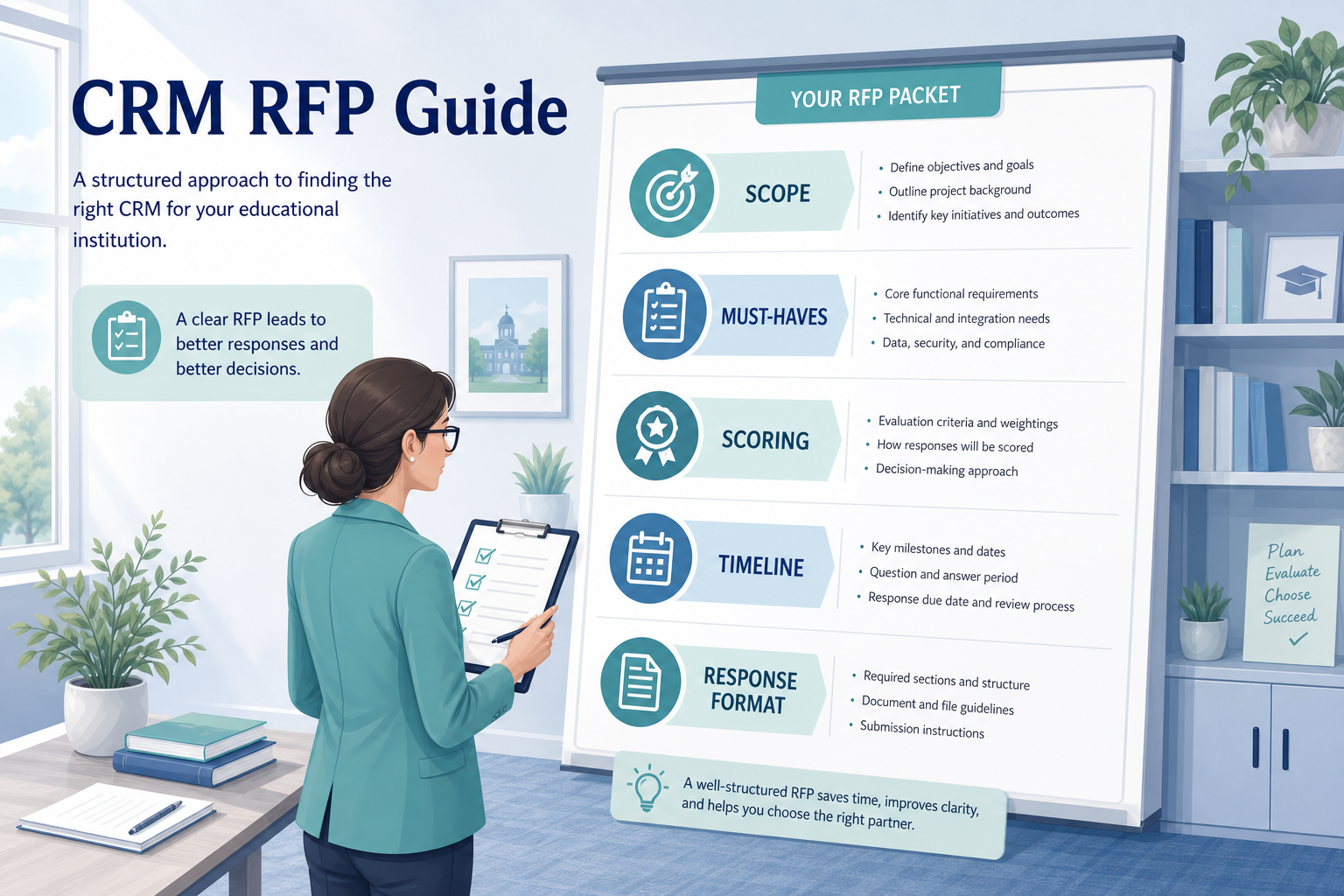
A CRM RFP (or lighter vendor brief) is a written request that restates outcomes, must-haves, constraints, evaluation criteria, and how vendors must reply — so finalists answer the same questions. Decision rule: do not send an RFP until your requirements sheet is demo-ready; if you cannot score answers against pass/fail checks, keep writing the brief.
Outcomes first
Must + constraints
Criteria weights
Response format
Same ask to all
No wishlist novel
Goals
Features
Integrations
Cost
Ease of use
Growth
Key takeaways
Brief ≠ feature dump — Long wishlists invite yes-to-everything replies; outcomes and constraints force honesty.
Same packet to every finalist — Comparable answers beat sequential sales decks.
Pass/fail beats adjectives — Every must-have needs a check you can verify in demo or trial.
SMB can stay light — A 2–4 page vendor brief is enough when procurement is informal — structure still matters.
Keep the brief thin enough that vendors reply in kind — structure enables comparison.
1. Build the brief from the requirements sheet
The RFP inherits the sheet — it does not invent a second wishlist.
Outcomes
Three observable 90-day results vendors must map to.
Must-haves
Pass/fail checks (e.g. non-admin creates deal + next step).
Constraints
Email/calendar you already use, admin hours, compliance baseline.
Copy 90-day outcomes, must vs nice, integrations, admin capacity, and budget posture into a single packet. Add company context (team size, sales motion) and a short “out of scope” list so vendors stop pitching year-three platform dreams.
Example: a 12-person B2B advisory firm (four sellers, founder, ops, delivery) freezes three outcomes — owner SLA on inbound, Friday pipeline with next step, clean delivery handoff — then writes a 3-page brief. Nice-to-haves (AI email drafts, marketplace apps) sit in an appendix labeled “not scored for shortlist.”
2. Define response format and how you will score
Formal procurement
Heavier RFP + legal review — still keep musts short.
SMB vendor brief
Email packet + shared doc is fine if structure matches.
No RFP needed
Solo buyer with one trial — skip formal RFP; keep a one-page decision memo instead.
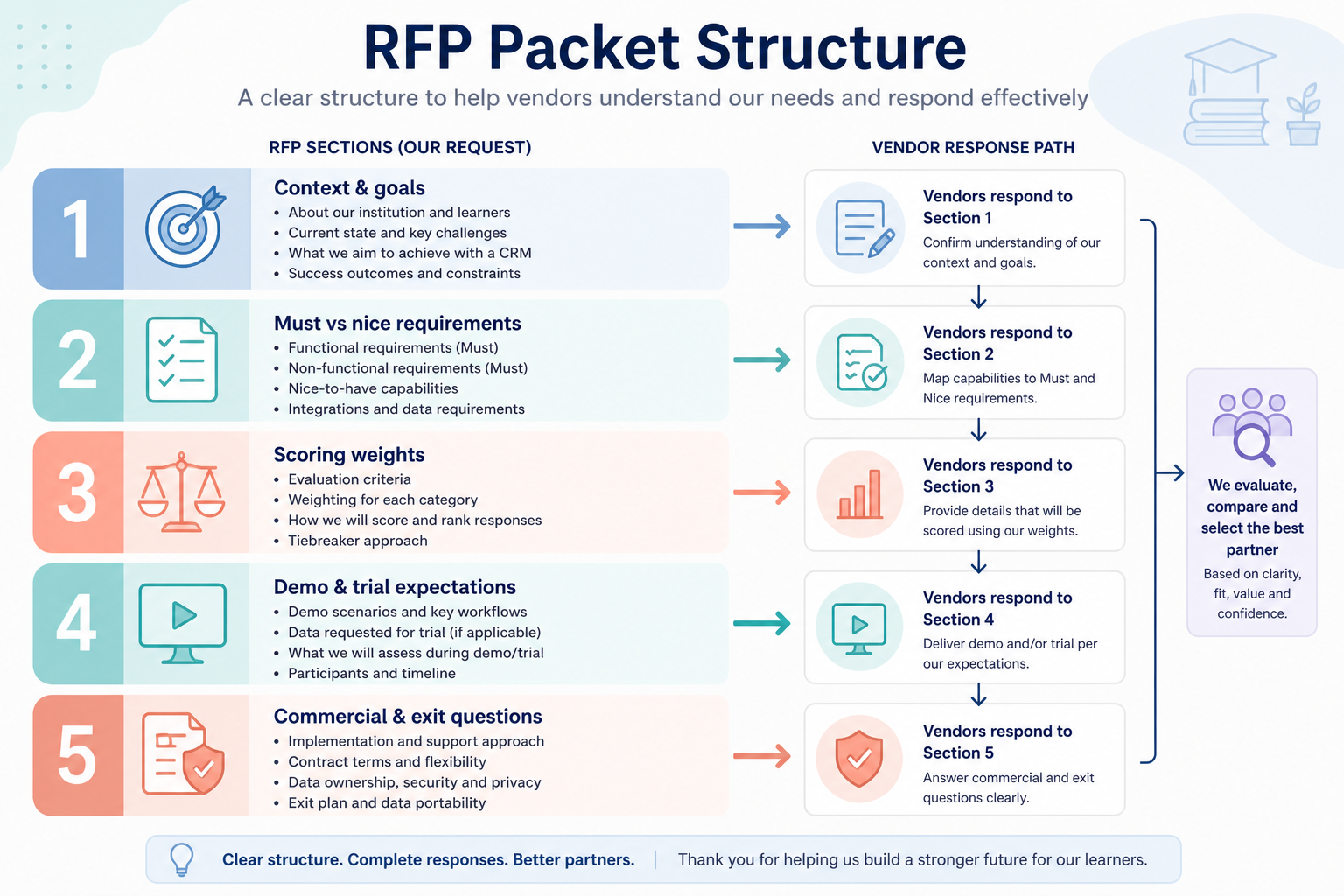
Tell vendors exactly which sections to answer: must-have mapping (plan/tier language without inventing list prices), integrations, implementation owner, export/exit, support channels, security docs location, and commercial term basics. State that demos follow only after written replies, and that scores use your evaluation weights.
Example: the advisory firm sends the same brief to three finalists from CRM Finder, with a five-business-day reply window. One reply maps every must-have to a named plan; another answers with marketing adjectives only and is scored zero on clarity before any demo.
3. Decide when a formal RFP is worth it
Use RFP
Procurement, multi-approver, or regulated baseline.
Use brief
Small team, 2–3 finalists, written answers still required.
Skip both
Only when one owner trials with a frozen sheet and memo.
Use a full RFP when multiple stakeholders, security review, or procurement rules require comparable written bids. Prefer a short vendor brief when the team is small and speed matters — but never skip the requirements sheet.
Example: the same firm skips a 40-page RFP template and uses the 3-page brief + scorecard; finance still gets commercial clarity questions attached before signature.
RFP mistakes
Sending a feature encyclopedia
Vendors will claim support for everything; you cannot score it.
Different asks per vendor
Breaks fairness before demos start.
Scoring demos before written replies
Theater replaces comparable answers.
Omitting exit and plan gates
Those belong in the brief — not as post-signature surprises.
4. Shortlist only inside the same job cluster
Compare tools whose core product matches the weekly output you named. Adjacent tools can integrate later — they should not hijack the primary shortlist because of brand familiarity.
Worked example: A team that needs meeting transcripts shortlists Otter-class tools, not a general chat assistant, even if the chat tool also “does meetings.”
5. Trial the named workflow before signatures
Run the same script on two or three finalists. Success is a non-admin completing the weekly output without a rescue — not a polished vendor tour.
6. Use a one-page checklist before demos
For CRM RFP Guide: Write a Vendor Brief That Shortlists Honestly, list must-haves, owners, integrations, and the weekly ritual this purchase must improve. Share the sheet with finance and IT before you schedule a second demo.
Name the primary job in one sentence.
List must-have gates (plans, SSO, data residency, usage caps).
Name integrations that must work on day one.
Assign an admin owner and a weekly user champion.
Define non-admin proof — what a sceptic completes without rescue.
Worked example: Harbor Ops refuses demos until the checklist is signed — cutting evaluation time in half.
7. Avoid the usual buying mistakes
Common failures in crm: buying for brand familiarity, comparing entry tiles across different usage units, skipping a fair trial script, and adding scope before adoption proves out.
Run one trial script on every finalist the same week. Score on the same card. Write a one-paragraph decision memo that names what you are not buying yet.
8. Hand off to the category shortlist
When assumptions are frozen, continue on /best/crm-software/ with the same headcount, usage band, and must-have gates on every quote.
Example official CRM product videos
Optional · 2 examples · collapse if you don’t need them
Verified vendor product videos from the CRM catalogue for context while you read. They are examples only — not a ranked shortlist — and they do not replace SoftwareGlimpse recommendations on this page.
Official vendor video · example
Attio — Attio | How to build your sales pipelines
This video is hosted on YouTube
This content is hosted by YouTube. The player loads only after you allow marketing cookies.
Not always. A short vendor brief with the same sections is enough for most SMB buys. Decision rule: if you need comparable written answers across finalists, use a brief; if procurement requires formal bids, expand into an RFP without lengthening the must-have list.
What should a CRM RFP include?
Context, 90-day outcomes, must-haves with pass/fail checks, constraints, evaluation criteria/weights, response format, timeline, and commercial/security questions — not a marketplace feature dump.
How many vendors should receive the RFP?
Usually two or three finalists after a constrained shortlist. More packets slow scoring without improving fit.
Should pricing be in the RFP?
Ask for plan mapping and commercial clarity for your must-haves; estimate bands in the Cost Calculator — do not invent list prices in the brief.
What should I do next?
Freeze the requirements sheet, generate or paste a brief, shortlist with CRM Finder, then run demos from the Demo Guide.