SoftwareGlimpse
CRM Software

Is Close Worth It? Fit Scenarios Before You Buy

Decide if Close is worth it for your team — fit scenarios, tradeoffs, and when to keep looking — without invented ROI percentages.

By Lee M.Updated Aug 14, 20269 min readFact-checked

Quick answer

Close is worth buying when three things hold: it fits how you sell, a normal seller can run real deals in a trial without constant admin help, and the plan you need covers your must-haves. If fit, trial proof, or plan coverage fails, keep looking — don’t invent ROI to justify a shaky buy.

  • Fit how you sell
  • Seller can run deals alone
  • Plan covers must-haves
  • Admin time is real
  • No invented ROI
  • Walking away is fine
Goals
Features
Integrations
Cost
Ease of use
Growth

See Close before you decide

Core product overview media for a fit check — still not a substitute for the decision criteria on this page.

See Close in action

Official product overview for a fit check — not scoring, pricing, or comparative superiority.

This video is hosted on YouTube

This content is hosted by YouTube. The player loads only after you allow marketing cookies.

Official vendor video

Close CRM Demo

What this shows

  • Close CRM product walkthrough
  • calling, email, and pipeline workflows as presented by Close
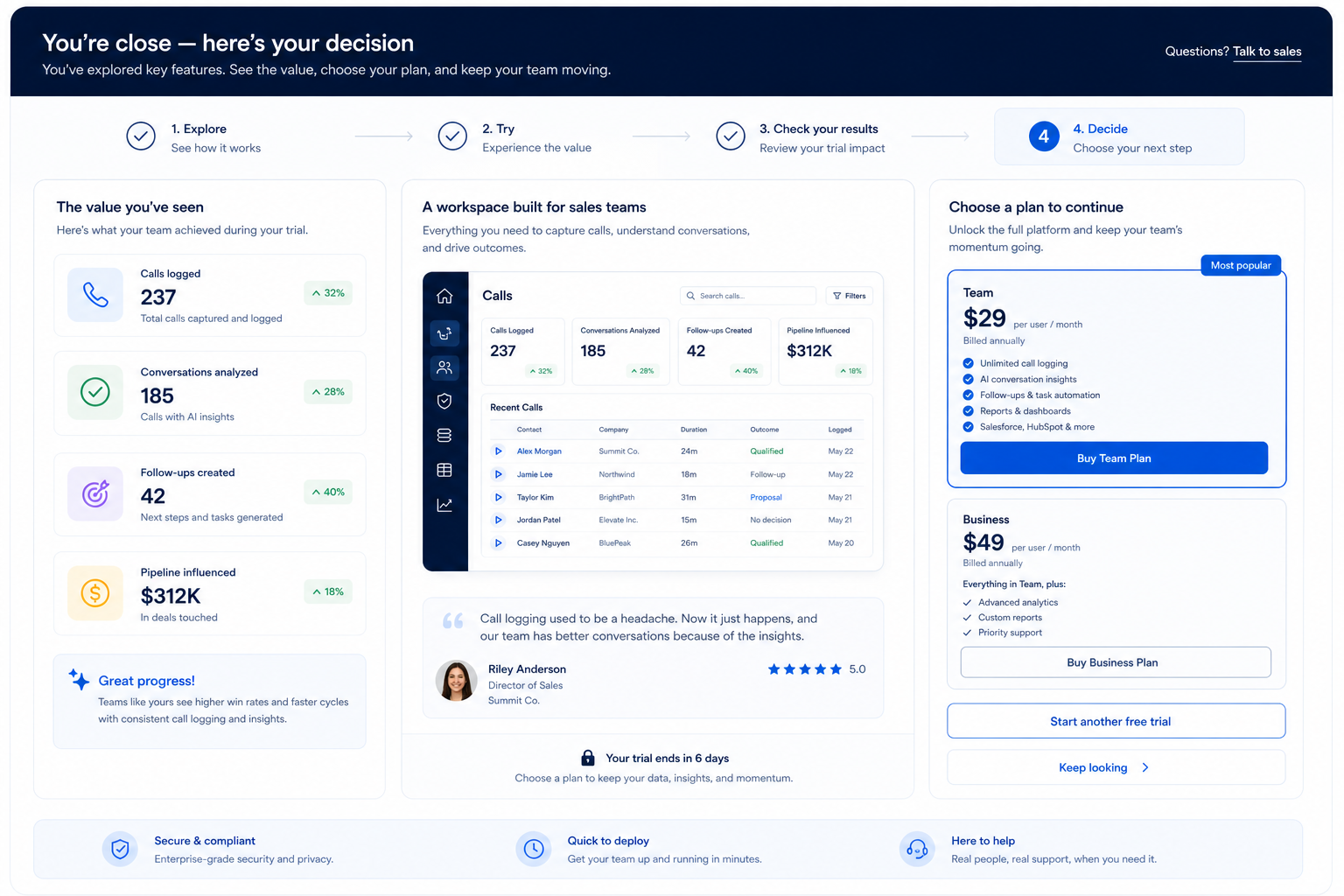
Product screenshots

Verified captures from Close's product interface.

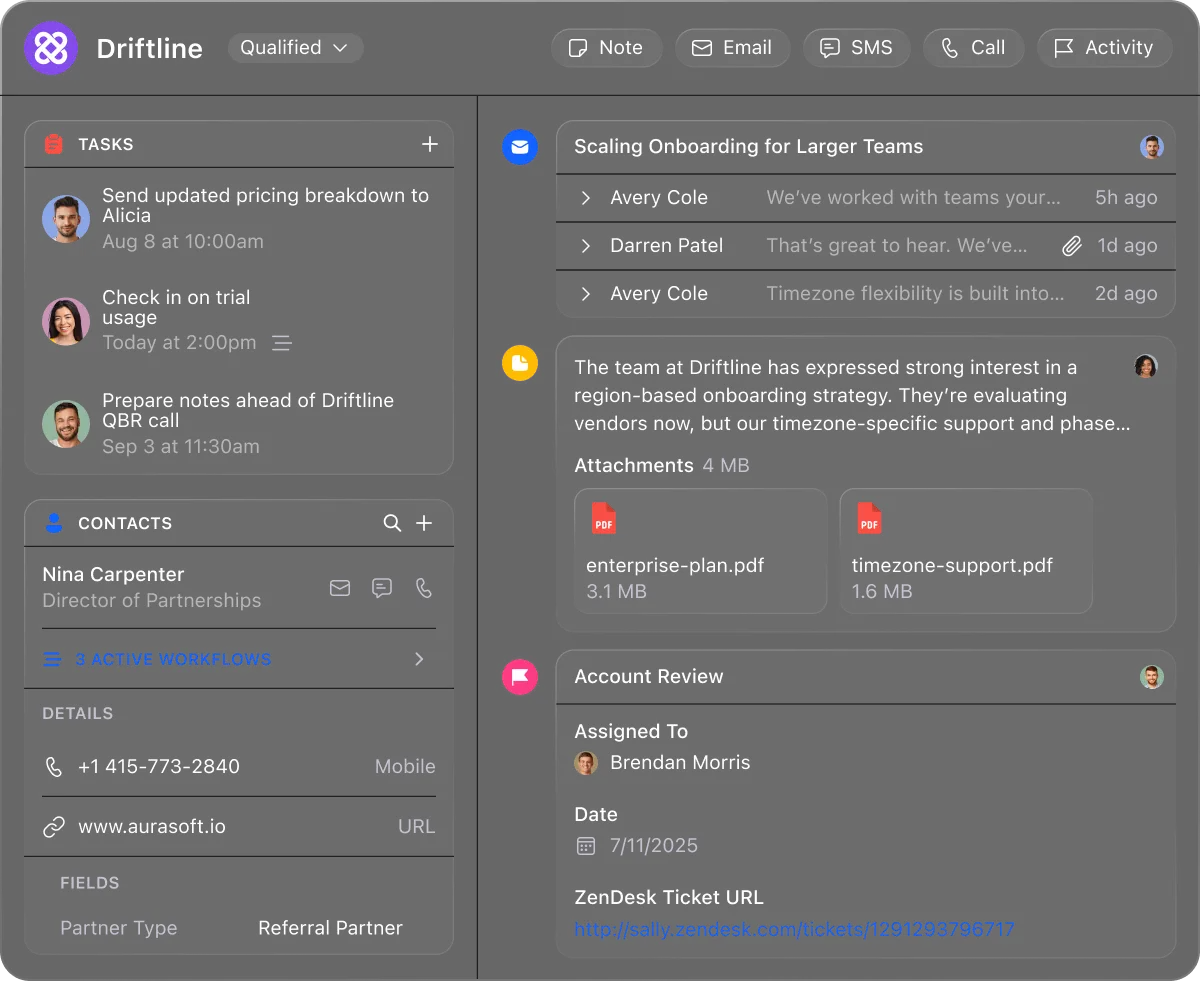
Close CRM lead view

Lead view showing opportunity context in Close.

Official Close homepage marketing UI asset

https://www.close.com · Checked 2026-08-13

Full product screenshots and evidence live on the Close research page.

Close decision takeaways

  • What it is Sales CRM built around calling, email, SMS, and Chloe AI automation for high-velocity inside sales teams.
  • Best for Inside sales and outbound teams that live on phone/email/SMS; Teams that want AI (Chloe) working leads inside the CRM; SMBs replacing disconnected dialer + CRM stacks
  • Not ideal for Buyers seeking the cheapest visual pipeline CRM; Teams that mainly need marketing automation suites; Orgs that need free forever CRM
  • Strengths to verify yourself Native calling, email, and SMS in one sales inbox; Chloe AI agent for calling, qualification, follow-ups, and meeting booking; Clear Solo→Scale ladder for outbound teams; Automatic call logging and AI lead summaries. Treat each as a claim to test in the trial, not a fact to repeat.
  • Watch-outs to accept or reject Growth/Scale seat pricing is expensive versus pipeline-first CRMs; Calling usage and premium phone add-ons increase total cost of ownership; AI credit pools refresh monthly without rollover; Advanced automation depth is plan-gated to Growth/Scale
  • Editorial recommendation Choose Close when inside sales and outbound teams that live on phone/email/sms. Compare alternatives when buyers seeking the cheapest visual pipeline crm.

Is Close worth it?

  1. 1Best-for
  2. 2Weaknesses
  3. 3Core loop
  4. 4Gates
  5. 5Admin
  6. 6Buy/pass

Close worth-it framework

Close worth-it decision framework diagram.
Buy Close only when fit, trial evidence, and qualifying cost agree.

Close checklist

Bring these questions to every demo

Ask vendors to show the workflow live, not just describe it.

  • 1Pass the fit checklistBest-for match; not-ideal patterns do not dominate.
  • 2Prove the non-admin core loopTrial evidence beats the demo.
  • 3Confirm the qualifying planMust-haves on a real tier, capacity included.
  • 4Choose buy · trial · walkWrite the reason; do not invent ROI %.

1. Score the fit checklist honestly

Close worth-it diagram 1.
Use this Close scorecard — four or more “no” answers means keep looking.
  • Strong fit

    Motion matches Inside sales and outbound teams that live on phone/email/SMS and Teams that want AI (Chloe) working leads inside the CRM; admin named.

  • Borderline

    Needs are real but admin capacity is thin — trial hard, set a decide-by date.

  • Poor fit

    Poor-fit patterns dominate — compare Pipedrive and Freshsales.

Answer yes or no. Four or more “no” answers means Close is the wrong tool right now.

  1. Does your motion match who it serves well? Best for: Inside sales and outbound teams that live on phone/email/SMS; Teams that want AI (Chloe) working leads inside the CRM; SMBs replacing disconnected dialer + CRM stacks.
  2. Are you outside the poor-fit patterns? Weaker fit: Buyers seeking the cheapest visual pipeline CRM; Teams that mainly need marketing automation suites; Orgs that need free forever CRM.
  3. Do you need contact management, lead management, and pipeline management as day-one work?
  4. Is there an admin with ~2 hours a week?
  5. Can you name the decision better pipeline data would change?

Worked example: a 12-person B2B advisory team scores five yeses for Close; the gap is admin capacity, so they fix that before spending.

2. Label every watch-out: acceptable, mitigable, or disqualifying

Close worth-it diagram 4.
Sort Close watch-outs into buy / trial / walk paths — disqualifying means stop.
  • Acceptable

    You can name why it does not affect your three outcomes.

  • Mitigable

    Owner, cost, and date attached — or it is not a mitigation.

  • Disqualifying

    It blocks an outcome — compare Pipedrive and Freshsales now.

Do not start with the strengths list. Sort each researched watch-out into one bucket — no “we will see.”

  1. List the watch-outs. Start with: Growth/Scale seat pricing is expensive versus pipeline-first CRMs; Calling usage and premium phone add-ons increase total cost of ownership; AI credit pools refresh monthly without rollover.
  2. Mark each: acceptable · mitigable (named owner + cost + date) · disqualifying.
  3. Treat strengths as trial claims, not facts. Verify: Native calling, email, and SMS in one sales inbox; Chloe AI agent for calling, qualification, follow-ups, and meeting booking.

Worked example: a 12-person B2B advisory team marks one Close watch-out mitigable (ops owns it), one acceptable, and one disqualifying if it appears in trial.

3. Run a scripted Close trial — not a guided demo

Close worth-it diagram 2.
Prove a real Close deal record works without an admin watching.
  • Trial pass

    Core loop works unaided; sellers finish without babysitting.

  • Trial ambiguous

    Extend once with one written question that would close it.

  • Trial fail

    Sellers need help for basic record work — that does not improve after purchase.

Use real deals and your least enthusiastic seller.

  1. Non-admin loop: create company + person, create deal, log activity, set next step, move stage.
  2. One task each for: contact management, lead management, and pipeline management.
  3. Run one Friday review inside Close — no spreadsheet.
  4. Break something on purpose (reassign, merge, export) and time the recovery.

Our pricing snapshot records a 14-day trial on Solo, Essentials, and Growth — confirm current terms on the Close pricing page before you build a schedule around it.

Worked example: a 12-person B2B advisory team gives eight scripted tasks to the two sellers least excited about CRM and treats every question as a training-cost line.

Close evaluation script

  1. Day 1: Honest workspace

    • One Close pipeline with real stages
    • Three real open deals with next steps
    • Confirm which plan the trial runs on
  2. Day 3: Non-admin loop

    • Seller runs create → log → next step → stage
    • Log a real call and email
    • Write down every question asked
  3. Day 7: Weekly review

    • Test: contact management and lead management
    • Friday review entirely in Close
    • Reassign an owner and export a list
  4. Day 14: Decide

    • Score fit, trial, plan, admin capacity
    • Confirm qualifying plan on /pricing/close/
    • Write buy, extend, or pass with a reason

4. Check the plan gates before you call it good value

Close worth-it diagram 3.
Map Close must-haves to the cheapest qualifying plan before you talk price.
  • Plan pass

    Must-haves sit on a tier you can accept.

  • Plan stretch

    Qualifying tier is above budget — decide, do not improvise.

  • Plan fail

    Capability or capacity blocks you — compare Pipedrive and Freshsales.

Price the tier your must-haves actually need.

  1. List must-haves the trial proved.
  2. Map each to the lowest Close plan. Plan-gated in research: pipeline management (Essentials, Growth, Scale); workflow automation (Growth, Scale); sales automation (Growth, Scale).
  3. The highest plan on that list is what you are buying.
  4. Check capacity too. Confirm Close seat/record caps before you commit.
  5. Estimate that plan in the Cost Calculator — if it breaks budget, the honest answer is “not worth it.”

Worked example: a 12-person B2B advisory team finds forecasting forces a higher Close plan than budgeted, so they re-run numbers before deciding.

5. Write the one-page decision: buy, extend, or pass

Close buy / trial / walk decision paths.
Buy Close only when fit, trial proof, and plan coverage all clear.
  • Buy

    Fit, trial, plan, and owners all green — go to setup.

  • Extend

    One open question, time-boxed, with a written closing condition.

  • Pass

    Keep looking — try Pipedrive and Freshsales. Better than forced ROI maths.

Keep it to one page before anyone argues about renewal.

  1. Fit score + named gaps.
  2. Watch-outs accepted and who owns each mitigation.
  3. Trial evidence (what non-admins could / could not do).
  4. Qualifying plan and the must-have that set it.
  5. Admin owner + hours.
  6. Buy · extend (one closing condition) · or pass — with a re-check date.

Worked example: a 12-person B2B advisory team buys Close only after the admin is named with real hours and the qualifying plan is confirmed in writing.

Close “worth it” mistakes

  • Inventing ROI percentages

    Use adoption evidence and cost bands. A fabricated payback number loses approval meetings.

  • Confusing brand polish with fit

    Research says Close fits Inside sales and outbound teams that live on phone/email/SMS and Teams that want AI (Chloe) working leads inside the CRM — check yours.

  • Trialling with your biggest champion

    Champions succeed with anything. Give the script to the sceptic.

  • Calling the entry tile a bargain

    Plan-gated in research: pipeline management (Essentials, Growth, Scale); workflow automation (Growth, Scale); sales automation (Growth, Scale).

  • Buying without an admin owner

    No named owner with real hours means the data decays and the tool gets blamed.

  • Treating this page as the full review

    Read the Close review for criterion scores and evidence.

Frequently asked questions

  • Is Close worth it for small teams?

    Yes when your motion matches Inside sales and outbound teams that live on phone/email/SMS and Teams that want AI (Chloe) working leads inside the CRM, someone can admin weekly, and the qualifying plan clears must-haves. No admin capacity means not worth it yet.

  • Who should not buy Close?

    Weaker fit: Buyers seeking the cheapest visual pipeline CRM; Teams that mainly need marketing automation suites; Orgs that need free forever CRM. Buyers seeking the cheapest visual pipeline CRM

  • What are the main Close tradeoffs?

    Growth/Scale seat pricing is expensive versus pipeline-first CRMs; Calling usage and premium phone add-ons increase total cost of ownership; AI credit pools refresh monthly without rollover. Label each acceptable, mitigable, or disqualifying before you sign.

  • How do I test Close properly?

    Scripted trial with real deals and a sceptical seller: non-admin loop, one task per key capability, one Friday review in Close, one recovery task. Our pricing snapshot records a 14-day trial on Solo, Essentials, and Growth — confirm current terms on the Close pricing page before you build a schedule around it.

  • How is this different from the review?

    The review carries verdict and scores. This guide is the decision memo: fit, watch-outs, trial, plan gates, buy/extend/pass.

  • Which Close plan should I price?

    The one set by your highest-gated must-have. Plan-gated in research: pipeline management (Essentials, Growth, Scale); workflow automation (Growth, Scale); sales automation (Growth, Scale). Estimate that plan in the Cost Calculator.

  • What if we already bought it?

    Re-run setup and implementation checklists, measure adoption, and audit plan gates before renewal.

  • What should I do next?

    Read the Close review, run plans diligence for the qualifying tier, or shortlist with CRM Finder if the answer is “not yet.”

Was this article helpful?

Have more questions? Contact our support team.

SoftwareGlimpse Updates

Want clearer software shortlists? Get buying guides and comparisons by email.

Newsletter coming soon.