Closely Plans: Seats, Credits, and Qualifying Tiers
Start with what you are not buying: Not a CRM deal-pipeline system of record. Closely sits beside your CRM as an outbound engine, and it must not become the place your deals live. What you are buying is two things multiplied together: Plans are gated by LinkedIn sender seats and enrichment/AI credit bundles. Published rungs: Starter ($29/mo billed annually) · Growth ($87/mo billed annually) · Essential ($145/mo billed annually) · Custom (quote only). So your tier is decided by how many LinkedIn senders you will genuinely warm and operate — not by team size, and not by contact volume.
Quick answer
Price Closely by the number of LinkedIn senders you will genuinely warm and operate, then by the credit bundle your enrichment volume needs — and keep your pipeline in a CRM, because this is not a system of record.
- Built for outbound teams running LinkedIn and email sequences together
- Plans are gated by LinkedIn sender seats and enrichment/AI credit bundles.
- Not a CRM deal-pipeline system of record.
Closely plans takeaways
- Packaging is often usage-shaped — Researched plans: Starter, Growth, Essential, Custom. Confirm credit and seat limits in writing.
- Must-haves set the tier — Plan-gated in research: built-in calling (Growth, Essential, Custom).
- No invented totals — Never invent list prices here — confirm seats, credits, and quote terms on /pricing/closely/.
- Seat discipline still matters — Count who prospects or dials weekly — not the whole org chart — before you compare Closely packages.
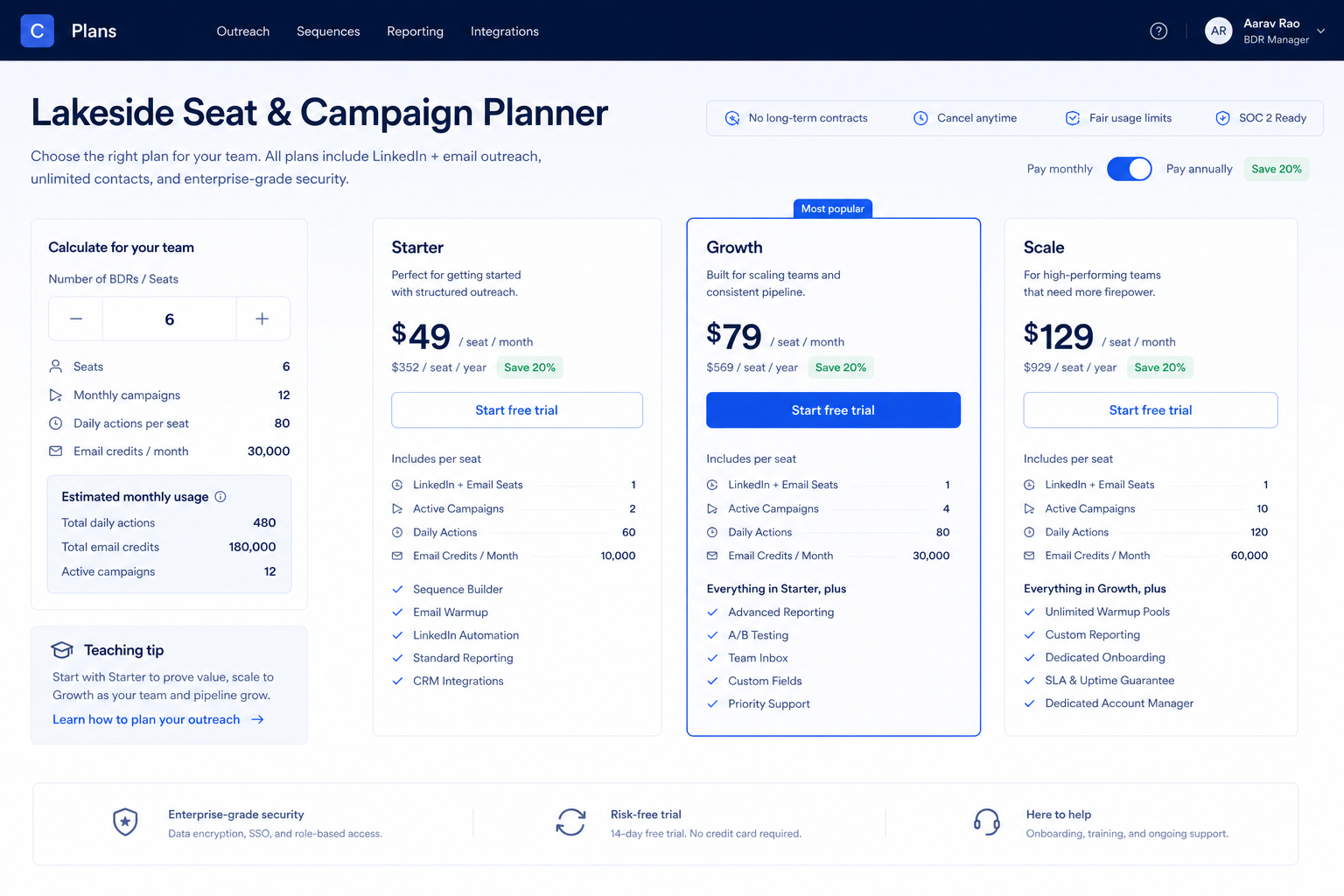
Closely plan anatomy
Closely must vs nice
- Prospecting + CRM sync
- Sequences or dialer
- Extra enrichment packs
- AI assistance
Frequently asked questions
Why don’t you list dollar prices here?
Never invent list prices here — confirm seats, credits, and quote terms on /pricing/closely/.
What if there is no public plan matrix?
Common for sales intelligence. Compare with a written must-have sheet and quote diligence — not blog “starting at” figures.
Seats or credits — which matters more?
Whichever your day-one jobs consume. Many teams under-buy credits and over-buy spectator seats — reverse that.
Senders × credits
Outbound tooling mistakes
Buying sender seats nobody will warm
A dormant sender costs money and produces no replies. Operate one well before adding a second.
Ignoring credit consumption
Bonus enrichment/AI credits emphasized on Growth/Essential versus Starter.
Letting deals live here
Not a CRM deal-pipeline system of record.
Before you decide
Bring these questions to every demo
Ask vendors to show the workflow live, not just describe it.
- 1Every sender seat has a named human who reads repliesUnnamed senders are subscriptions, not senders.
- 2Credit baseline taken from last quarter's real activityUsage-based cost needs a usage-based estimate.
- 3System of record stated in writing: the CRM, not this toolPlus a written warm-up and restricted-account plan.
1. Name the humans behind each sender account
Every sender needs a name beside it — the person who will read and answer the replies. If a sender has no name, it is not a sender, it is a subscription. This exercise usually reduces the intended plan by one rung, which is the cheapest optimisation available in outbound tooling.
2. Estimate credit burn from last quarter's prospecting
Take the number of prospects you actually enriched and contacted last quarter and use that as your monthly baseline rather than the target in your plan. Credit consumption tracks activity, and activity is more honest in hindsight than in a forecast.
3. Write down where the pipeline lives, and enforce it
One line, shared with the team: deals live in the CRM; this tool starts conversations and hands them over. Also write the channel-risk plan in the same place — warm-up pace, daily caps, what happens if an account gets restricted — because that plan is the difference between a channel and an incident.
Was this article helpful?
Have more questions? Contact our support team.
Part of Closely review · Sales Intelligence hub
Related guides
Supporting reading in this topic — not a generic related-posts dump.
- How to Choose Sales Intelligence SoftwareA decision framework for picking sales intelligence software by primary job — contact data, enrichment, engagement, or dialer — then testing coverage, credits, CRM sync, compliance, and rep workflow before you commit.
- Is Closely Worth It? Fit Scenarios Before You BuyDecide if Closely is worth it for your outbound pod — fit scenarios, credit economics, and when to keep looking — without invented ROI percentages.
- Sales Intelligence Pricing Guide: Seats, Credits & First 90 DaysLearn how sales intelligence pricing works — seats vs credits vs pay-as-you-go, what a credit unlocks, and how to compare written quotes for the first 90 days — without invented price tables.
- Sales Intelligence ROI Guide: Value Without Fake NumbersFrame SI return as observable operational gains tied to 90-day outcomes — using formulas and your inputs only, never invented ROI percentages or dollar totals.
- Sales Intelligence Total Cost Guide: Beyond Seat PriceMap sales intelligence TCO categories — seats, credits, deliverability, sync admin time, training, and stack overlap — without inventing dollar totals.
Related products
Related comparisons
SoftwareGlimpse Updates
Want clearer software shortlists? Get buying guides and comparisons by email.
Newsletter coming soon.