Trello vs Wrike
Thesis: Overlapping use cases, different tradeoffs — Trello and Wrike share buyer workflows; choose based on documented strengths and limits. Comparison thesis: Overlapping use cases, different tradeoffs. Choose Trello only if your buying job matches “Lightweight Kanban boards (Atlassian) — Free; Standard from $5/user/mo annual.” rather than Wrike's shape. Choose Wrike only if your buying job matches “Enterprise/agency work management with proofing, intake and resourcing — Team from $10/use” rather than Trello's shape. Workflow advantage: Trello leans shared coverage; Wrike leans work-management, resource-planning. Trade-off: you gain focus on one product's motion at the cost of the other's adjacent coverage — no universal winner. Major differences: - Buyer thesis: Overlapping use cases, different tradeoffs — Trello and Wrike share buyer workflows; choose based on documented strengths and limits. - Positioning: Trello is Lightweight Kanban boards (Atlassian) — Free; Standard from $5/user/mo annual.; Wrike is Enterprise/agency work management with proofing, intake and resourcing — Team from $10/user/mo annual.. - Company-size focus: Trello (micro, small-business, mid-market) vs Wrike (small-business, mid-market, enterprise). - Workflow coverage skew: Trello-leaning — vs Wrike-leaning work-management, resource-planning. - Researched limits: Trello — Limited planning depth vs Work OS; Wrike — Business tier pricing jump. Limitations — Trello: Limited planning depth vs Work OS; Premium needed for richer views; Wrike: Business tier pricing jump; Heavier admin than lightweight tools. Poor-fit cases: Trello is a poor fit when that limitation bites: Limited planning depth vs Work OS · Wrike is a poor fit when that limitation bites: Business tier pricing jump · Avoid Trello if you actually need Wrike's motion (Enterprise/agency work management with proofing, intake and resourcing — Team fr) Neither product has a completed hands-on product test on SoftwareGlimpse — this comparison is research/data-based only.

Trello
Lightweight Kanban boards (Atlassian) — Free; Standard from $5/user/mo annual.
Best for
- • your buying job matches “Lightweight Kanban boards (Atlassian) — Free; Standard from $5/user/mo annual.” rather than Wrike's shape
- • use-case priority is project-tracking and Wrike is secondary for that motion
Starting from $5.00/user/mo
Free plan available
VS
Our verdict
Comparison thesis: Overlapping use cases, different tradeoffs. Choose Trello only if your buying job matches “Lightweight Kanban boards (Atlassian) — Free; Standard from $5/user/mo annual.” rather than Wrike's shape. Choose Wrike only if your buying job matches “Enterprise/agency work management with proofing, intake and resourcing — Team from $10/use” rather than Trello's shape. Workflow advantage: Trello leans shared coverage; Wrike leans work-management, resource-planning. Trade-off: you gain focus on one product's motion at the cost of the other's adjacent coverage — no universal winner. Trello is a poor fit when that limitation bites: Limited planning depth vs Work OS Wrike is a poor fit when that limitation bites: Business tier pricing jump Hard limitation for Trello when it matters: Limited planning depth vs Work OS. Hard limitation for Wrike when it matters: Business tier pricing jump. Neither product has a completed hands-on product test on SoftwareGlimpse — this comparison is research/data-based only. Pricing threshold: estimate spend with the cost calculator before shortlisting.
Trello is better for
- ✓ Ease of use
- ✓ Value for money
Wrike is better for
- ✓ Timeline / Gantt
- ✓ Automations
- ✓ Collaboration
- ✓ AI features
Tie
- • Free plan
- • Integrations
Choose Trello if: your buying job matches “Lightweight Kanban boards (Atlassian) — Free; Standard from $5/user/mo annual.” rather than Wrike's shape
Choose Wrike if: your buying job matches “Enterprise/agency work management with proofing, intake and resourcing — Team from $10/use” rather than Trello's shape

Wrike
Enterprise/agency work management with proofing, intake and resourcing — Team from $10/user/mo annual.
Best for
- • your buying job matches “Enterprise/agency work management with proofing, intake and resourcing — Team from $10/use” rather than Trello's shape
- • use-case priority is work-management and Trello is secondary for that motion
Starting from $10.00/user/mo
Free plan available
Quick verdict
Start here — then dig into the evidence below.
Choose Trello if…
- your buying job matches “Lightweight Kanban boards (Atlassian) — Free; Standard from $5/user/mo annual.” rather than Wrike's shape
- use-case priority is project-tracking and Wrike is secondary for that motion
- You prioritize ease of use
- You prioritize value for money
Choose Wrike if…
- your buying job matches “Enterprise/agency work management with proofing, intake and resourcing — Team from $10/use” rather than Trello's shape
- use-case priority is work-management and Trello is secondary for that motion
- You prioritize timeline / gantt
- You prioritize automations
Overall recommendation
Comparison thesis: Overlapping use cases, different tradeoffs. Choose Trello only if your buying job matches “Lightweight Kanban boards (Atlassian) — Free; Standard from $5/user/mo annual.” rather than Wrike's shape. Choose Wrike only if your buying job matches “Enterprise/agency work management with proofing, intake and resourcing — Team from $10/use” rather than Trello's shape. Workflow advantage: Trello leans shared coverage; Wrike leans work-management, resource-planning. Trade-off: you gain focus on one product's motion at the cost of the other's adjacent coverage — no universal winner. Trello is a poor fit when that limitation bites: Limited planning depth vs Work OS Wrike is a poor fit when that limitation bites: Business tier pricing jump Hard limitation for Trello when it matters: Limited planning depth vs Work OS. Hard limitation for Wrike when it matters: Business tier pricing jump. Neither product has a completed hands-on product test on SoftwareGlimpse — this comparison is research/data-based only. Pricing threshold: estimate spend with the cost calculator before shortlisting.
Key trade-off
Trello trades toward ease of use; Wrike trades toward timeline / gantt.
Winner by category
Only dimensions with researched evidence for this pair.
| Dimension | Winner | Why |
|---|---|---|
| Free plan | Tie | Trello vs Wrike on free plan: Trello and Wrike share buyer workflows; choose based on documented strengths and limits. Decision edge to neither product on this criterion for this pair — unlike a generic feature matrix, the hinge is the buyer job above. |
| Ease of use | Trello wins | Trello vs Wrike on ease of use: Trello and Wrike share buyer workflows; choose based on documented strengths and limits. Decision edge to Trello on this criterion for this pair — unlike a generic feature matrix, the hinge is the buyer job above. |
| Timeline / Gantt | Wrike wins | Trello vs Wrike on timeline gantt: Trello and Wrike share buyer workflows; choose based on documented strengths and limits. Decision edge to Wrike on this criterion for this pair — unlike a generic feature matrix, the hinge is the buyer job above. |
| Automations | Wrike wins | Trello vs Wrike on automations: Trello and Wrike share buyer workflows; choose based on documented strengths and limits. Decision edge to Wrike on this criterion for this pair — unlike a generic feature matrix, the hinge is the buyer job above. |
| Collaboration | Wrike wins | Trello vs Wrike on collaboration: Trello and Wrike share buyer workflows; choose based on documented strengths and limits. Decision edge to Wrike on this criterion for this pair — unlike a generic feature matrix, the hinge is the buyer job above. |
| Integrations | Tie | Trello vs Wrike on integrations: Trello and Wrike share buyer workflows; choose based on documented strengths and limits. Decision edge to neither product on this criterion for this pair — unlike a generic feature matrix, the hinge is the buyer job above. |
| AI features | Wrike wins | Trello vs Wrike on ai features: Trello and Wrike share buyer workflows; choose based on documented strengths and limits. Decision edge to Wrike on this criterion for this pair — unlike a generic feature matrix, the hinge is the buyer job above. |
| Reporting | Wrike wins | Trello vs Wrike on reporting: Trello and Wrike share buyer workflows; choose based on documented strengths and limits. Decision edge to Wrike on this criterion for this pair — unlike a generic feature matrix, the hinge is the buyer job above. |
| Value | Trello wins | Trello vs Wrike on value for money: Trello and Wrike share buyer workflows; choose based on documented strengths and limits. Decision edge to Trello on this criterion for this pair — unlike a generic feature matrix, the hinge is the buyer job above. |
Side-by-side feature matrix
Normalized availability from product research — empty rows are not shown.
Work planning
| Feature | Trello | Wrike |
|---|---|---|
| Task boards & work views | Strong | Strong |
| Timeline / Gantt | Moderate | Strong |
| Workload & resource management | Limited | Strong |
| Time tracking | Moderate | Moderate |
Execution
| Feature | Trello | Wrike |
|---|---|---|
| Automations & workflows | Moderate | Strong |
| Docs & collaboration | Moderate | Strong |
| AI assistance | Moderate | Moderate |
Platform
| Feature | Trello | Wrike |
|---|---|---|
| Integrations ecosystem | Strong | Strong |
| Reporting & dashboards | Moderate | Strong |
Adjacent productivity
| Feature | Trello | Wrike |
|---|---|---|
| Document / PDF productivity | Limited | Limited |
| Remote access / screen share | Limited | Limited |
| Desktop workspace organizer | Limited | Limited |
Pricing comparison
Pricing evidence last checked Sep 10, 2026.
Trello
From $5.00/user/mo
- Free$0.00/user/mo
- Standard$5.00/user/mo
- Premium$10.00/user/mo
- Enterprise$17.50/user/mo
Wrike
From $10.00/user/mo
- Free$0.00/user/mo
- Team$10.00/user/mo
- Business$25.00/user/mo
- EnterpriseCustom
Seat-count estimates
Labeled estimates from verified starting per-seat pricing — not invoices.
| Seats | Trello | Wrike |
|---|---|---|
| 5 | ~$25.00/mo (5 × starting seat) | ~$50.00/mo (5 × starting seat) |
| 10 | ~$50.00/mo (10 × starting seat) | ~$100.00/mo (10 × starting seat) |
| 25 | ~$125.00/mo (25 × starting seat) | ~$250.00/mo (25 × starting seat) |
| 50 | ~$250.00/mo (50 × starting seat) | ~$500.00/mo (50 × starting seat) |
Estimate from verified starting per-seat pricing — actual total depends on plan, annual discounts, and add-ons.
Starting prices not verified for either product Model team cost scenarios in the project-management cost calculator Cost calculator: /tools/project-management-cost-calculator/
Best for
Scenario picks from researched strengths — not a universal ranking.
- → Depends
Prefer Trello when your buying job matches “Lightweight Kanban boards (Atlassian) — Free; Standard from $5/user/mo annual.” rather than Wrike's shape
Prefer Trello when your buying job matches “Lightweight Kanban boards (Atlassian) — Free; Standard from $5/user/mo annual.” rather than Wrike's shape
- → Depends
Prefer Trello when use-case priority is project-tracking and Wrike is secondary for that motion
Prefer Trello when use-case priority is project-tracking and Wrike is secondary for that motion
- → Depends
Prefer Wrike when your buying job matches “Enterprise/agency work management with proofing, intake and resourcing — Team from $10/use” rather than Trello's shape
Prefer Wrike when your buying job matches “Enterprise/agency work management with proofing, intake and resourcing — Team from $10/use” rather than Trello's shape
- → Depends
Prefer Wrike when use-case priority is work-management and Trello is secondary for that motion
Prefer Wrike when use-case priority is work-management and Trello is secondary for that motion
- → Trello
Best for ease of use
Trello vs Wrike on ease of use: Trello and Wrike share buyer workflows; choose based on documented strengths and limits. Decision edge to Trello on this criterion for this pair — unlike a generic feature matrix, the hinge is the buyer job above.
- → Trello
Best for value for money
Trello vs Wrike on value for money: Trello and Wrike share buyer workflows; choose based on documented strengths and limits. Decision edge to Trello on this criterion for this pair — unlike a generic feature matrix, the hinge is the buyer job above.
The differences that actually matter
Pair-specific analysis for Trello vs Wrike — not generic category copy.
Timeline / Gantt
Wrike aheadOn timeline / gantt, Wrike is ahead. Trello: Trails Wrike on this criterion. Wrike: Trello vs Wrike on timeline gantt: Trello and Wrike share buyer workflows; choose based on documented strengths and limits. Decision edge to Wrike on this criterion for this pair — unlike a generic feature matrix, the hinge is the buyer job above.. Feature evidence also diverges on Timeline / Gantt (Trello: Moderate; Wrike: Strong); Workload & resource management (Trello: Limited; Wrike: Strong); Time tracking (Trello: Moderate; Wrike: Moderate).
Automations
Wrike aheadOn automations, Wrike is ahead. Trello: Trails Wrike on this criterion. Wrike: Trello vs Wrike on automations: Trello and Wrike share buyer workflows; choose based on documented strengths and limits. Decision edge to Wrike on this criterion for this pair — unlike a generic feature matrix, the hinge is the buyer job above..
Integrations
TieTrello and Wrike are close on integrations. Trello vs Wrike on integrations: Trello and Wrike share buyer workflows; choose based on documented strengths and limits. Decision edge to neither product on this criterion for this pair — unlike a generic feature matrix, the hinge is the buyer job above.
Reporting
Wrike aheadOn reporting, Wrike is ahead. Trello: Trails Wrike on this criterion. Wrike: Trello vs Wrike on reporting: Trello and Wrike share buyer workflows; choose based on documented strengths and limits. Decision edge to Wrike on this criterion for this pair — unlike a generic feature matrix, the hinge is the buyer job above..
Pros and cons
Product-specific for this pair — derived from researched outcomes and editorial notes.
Trello
Pros
- Stronger on ease of use
- Stronger on value for money
Cons
- Trails on timeline / gantt
- Trails on automations
- Trails on collaboration
Wrike
Pros
- Stronger on timeline / gantt
- Stronger on automations
- Stronger on collaboration
- Stronger on ai features
Cons
- Trails on ease of use
- Trails on value for money
Implementation & learning curve
Based on researched setup / ease criteria for this pair.
Trello
- Stronger on ease of use: Trello vs Wrike on ease of use: Trello and Wrike share buyer workflows; choose based on documented strengths and limits. Decision edge to Trello on this criterion for this pair — unlike a generic feature matrix, the hinge is the buyer job above.
Wrike
- Trails on ease of use relative to Trello
Integrations
Overlaps and exclusives from product integration data when available.
Trello: Strong. Wrike: Strong.
Who should not choose each product
Decision quality improves when we say who should walk away.
Don't choose Trello if…
- You need Wrike's stronger timeline / gantt more than Trello's strengths
- You need Wrike's stronger automations more than Trello's strengths
- You need Wrike's stronger collaboration more than Trello's strengths
- Your primary fit looks closer to: your buying job matches “Enterprise/agency work management with proofing, intake and resourcing — Team from $10/use” rather than Trello's shape
Don't choose Wrike if…
- You need Trello's stronger ease of use more than Wrike's strengths
- You need Trello's stronger value for money more than Wrike's strengths
- Your primary fit looks closer to: your buying job matches “Lightweight Kanban boards (Atlassian) — Free; Standard from $5/user/mo annual.” rather than Wrike's shape
- Your primary fit looks closer to: use-case priority is project-tracking and Wrike is secondary for that motion
Alternatives worth considering
When neither product is the right fit.
Cross-functional work management with goals, workflows and AI Studio — Starter from $10.99/user/mo annual.
All-in-one configurable Work OS (tasks, docs, dashboards, ClickUp Brain) — Unlimited from $7/user/mo annual.
Atlassian Agile issue tracker for software teams — Free ≤10; Standard from ~$8.15/user/mo annual.
Work OS / work management platform with boards, timelines, automations and AI credits — Basic from $9/seat/mo annual (3-seat minimum).
Final verdict
Scenario-level close — not a repeat of the intro.
Trello wins when…
your buying job matches “Lightweight Kanban boards (Atlassian) — Free; Standard from $5/user/mo annual.” rather than Wrike's shape
Wrike wins when…
your buying job matches “Enterprise/agency work management with proofing, intake and resourcing — Team from $10/use” rather than Trello's shape
- Prefer Trello when your buying job matches “Lightweight Kanban boards (Atlassian) — Free; Standard from $5/user/mo annual.” rather than Wrike's shapeDepends
- Prefer Trello when use-case priority is project-tracking and Wrike is secondary for that motionDepends
- Prefer Wrike when your buying job matches “Enterprise/agency work management with proofing, intake and resourcing — Team from $10/use” rather than Trello's shapeDepends
- Prefer Wrike when use-case priority is work-management and Trello is secondary for that motionDepends
Which one should you choose?
Choose Trello if:
- your buying job matches “Lightweight Kanban boards (Atlassian) — Free; Standard from $5/user/mo annual.” rather than Wrike's shape
- use-case priority is project-tracking and Wrike is secondary for that motion
Choose Wrike if:
- your buying job matches “Enterprise/agency work management with proofing, intake and resourcing — Team from $10/use” rather than Trello's shape
- use-case priority is work-management and Trello is secondary for that motion
Product screenshots
Real product UI from our media library — no placeholders.
Trello
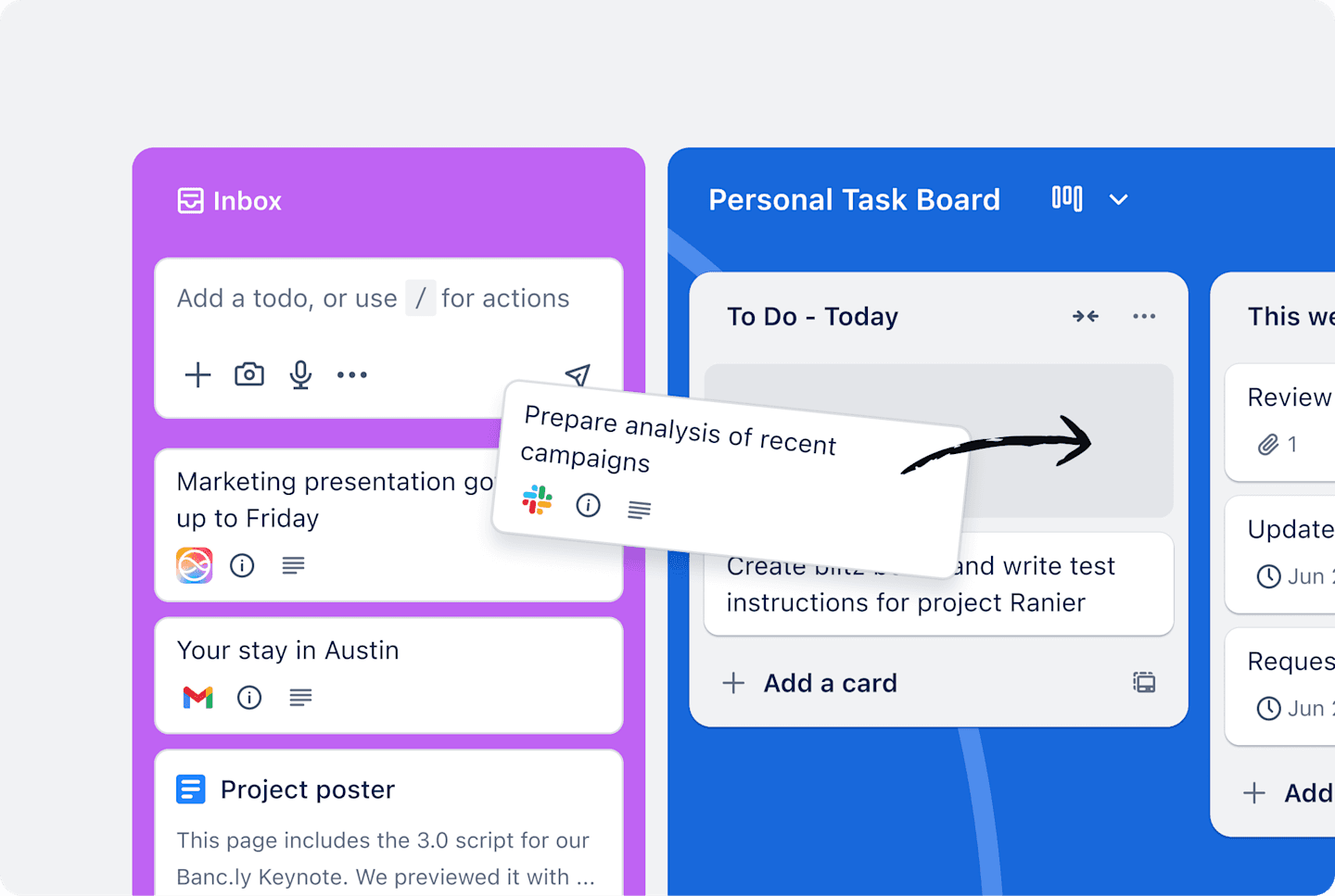
Wrike


FAQ
- Is Trello better than Wrike?
- Comparison thesis: Overlapping use cases, different tradeoffs. Choose Trello only if your buying job matches “Lightweight Kanban boards (Atlassian) — Free; Standard from $5/user/mo annual.” rather than Wrike's shape. Choose Wrike only if your buying job matches “Enterprise/agency work management with proofing, intake and resourcing — Team from $10/use” rather than Trello's shape. Workflow advantage: Trello leans shared coverage; Wrike leans work-management, resource-planning. Trade-off: you gain focus on one product's motion at the cost of the other's adjacent coverage — no universal winner. Trello is a poor fit when that limitation bites: Limited planning depth vs Work OS Wrike is a poor fit when that limitation bites: Business tier pricing jump Hard limitation for Trello when it matters: Limited planning depth vs Work OS. Hard limitation for Wrike when it matters: Business tier pricing jump. Neither product has a completed hands-on product test on SoftwareGlimpse — this comparison is research/data-based only. Pricing threshold: estimate spend with the cost calculator before shortlisting.
- Which is easier to use?
- Trello vs Wrike on ease of use: Trello and Wrike share buyer workflows; choose based on documented strengths and limits. Decision edge to Trello on this criterion for this pair — unlike a generic feature matrix, the hinge is the buyer job above.
- Which project management fits which team?
- Trello: your buying job matches “Lightweight Kanban boards (Atlassian) — Free; Standard from $5/user/mo annual.” rather than Wrike's shape Wrike: your buying job matches “Enterprise/agency work management with proofing, intake and resourcing — Team from $10/use” rather than Trello's shape
- Does Trello or Wrike have a free plan?
- Trello: Free plan available. Wrike: Free plan available.
- How does Trello vs Wrike pricing compare?
- Trello starts from $5.00/user/mo. Wrike starts from $10.00/user/mo. Confirm live vendor pricing before purchasing.
- How did SoftwareGlimpse compare these products?
- We map both products to the same category criteria, then evaluate trade-offs using verified product, pricing and feature evidence. Affiliate relationships never change outcomes.
- reviewTrello review
- reviewWrike review
- pricingTrello pricing
- pricingWrike pricing
- alternativeAsana alternative
- alternativeClickUp alternative
- alternativeJira alternative
- guideWhat Is Project Management Software?
- guideHow to Choose Project Management Software
- guideProject Management Pricing Guide
- categoryproject management hub
- finderBest project management software
- calculatorCost calculator
Related comparisons



Alternatives to consider

Asana
Cross-functional work management with goals, workflows and AI Studio — Starter from $10.99/user/mo annual.

ClickUp
All-in-one configurable Work OS (tasks, docs, dashboards, ClickUp Brain) — Unlimited from $7/user/mo annual.

Jira
Atlassian Agile issue tracker for software teams — Free ≤10; Standard from ~$8.15/user/mo annual.

monday.com
Work OS / work management platform with boards, timelines, automations and AI credits — Basic from $9/seat/mo annual (3-seat minimum).
Still deciding between Trello and Wrike?
Use Best project management software for a shortlist matched to your priorities, or build another side-by-side comparison.
- Independent criterion outcomes
- No invented scores or prices
- Affiliate links never change winners
Some visit links may be affiliate links — we may earn a commission at no extra cost to you. Comparison outcomes are never based on commission.
Part of Software comparisons · Project Management Software hub
Try a decision tool
Interactive helpers use recommendation criteria — affiliate status never changes outcomes.