How to Choose Project Management Software
A practical selection framework for work OS and adjacent productivity tools — by job, seats, plan gates, and integrations.
Quick answer
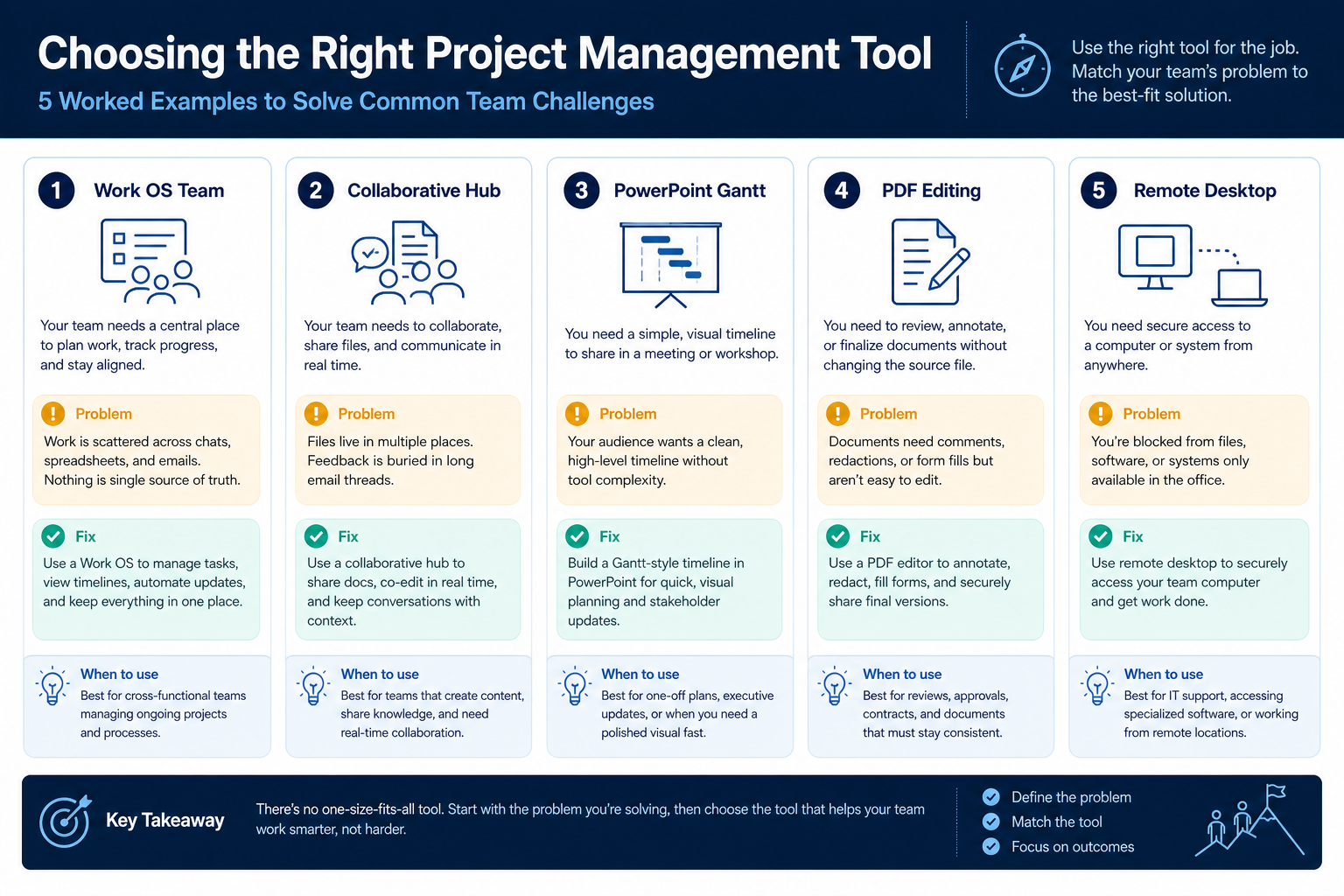
Choose project management software by the job that is blocking work — work OS / project tracking, PowerPoint timeline slides, PDF editing, remote support, or a desktop app workspace — then confirm seats, plan gates for boards/timelines/automations, and the integrations your team opens daily. Shortlist only tools whose core product is your job; a Gantt slide tool and a work OS are different purchases even when both live in this category.
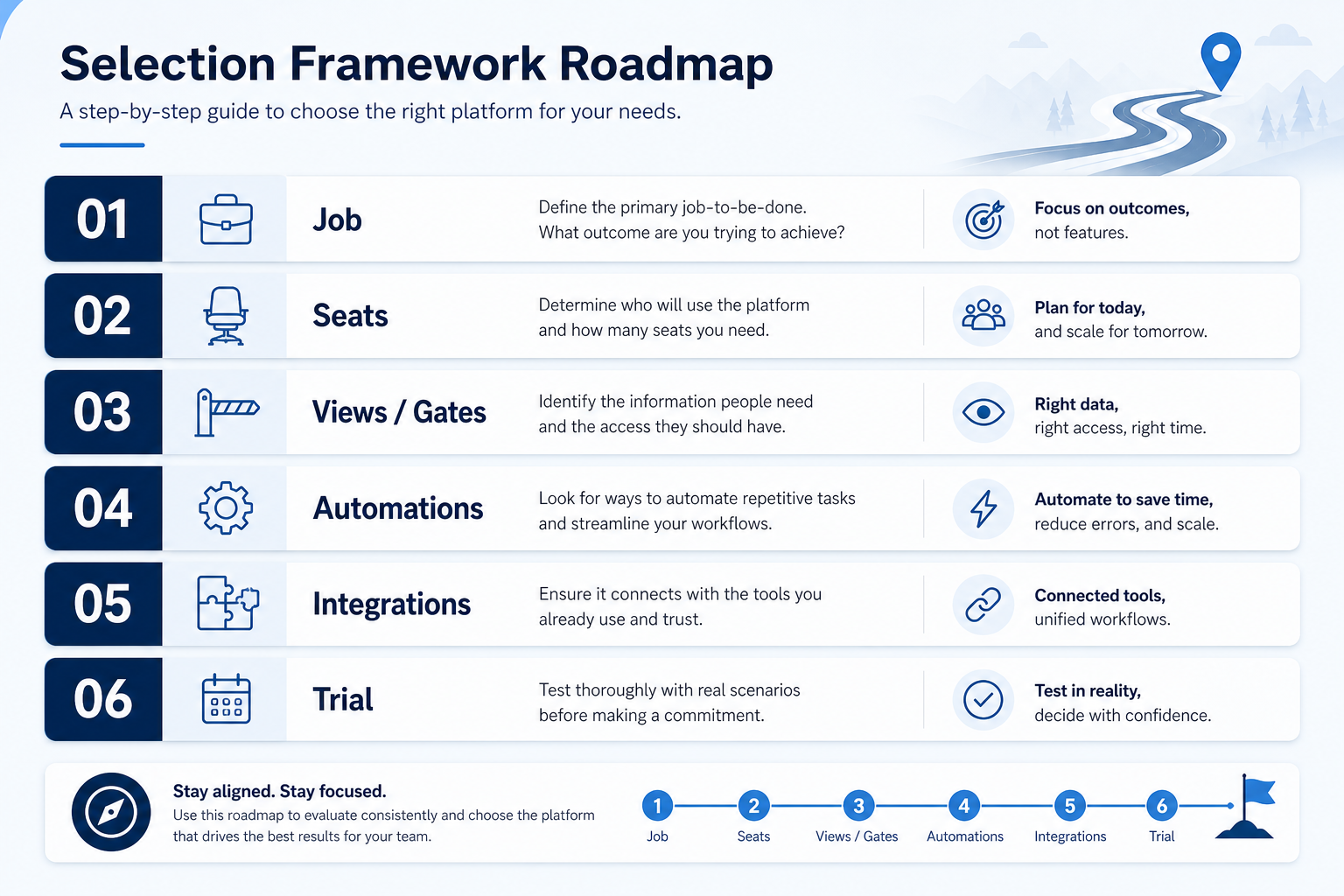
- Primary job to be done
- Seats vs plan minimums
- Must-have views & gates
- Automation intensity
- Native stack integrations
- Trial with one real workflow
What matters most
- “Project management” is several products — Work OS, timeline presenters, PDF editors, remote desktop, and desktop shells fail for different reasons. Pick the shape before you pick a brand.
- Plan gates change the real cost — Timeline, workload, and automation depth often unlock above entry tiers. Price the qualifying plan, not the starter tile.
- Integrations beat feature lists — Native Slack, Microsoft 365, Google, and CRM connectors save more time than a long Zapier directory.
- Do not invent scores from marketing pages — Use SoftwareGlimpse methodology qualitatively when comparing peers — see Best project management software for job-cluster awards.
Five worked examples
Interactive project management selection checklist
0/5 dimensions noted — saved in this browser only.
Primary job
Users needing a seat
Planning depth
Must integrate with
Automation need
1. Name the job in one sentence
Write: “We need software so that ___ happens every week without Slack archaeology.” If the blank is about shared ownership and status, you are in the work OS cluster. If it is about executive slides, PDFs, remote sessions, or desktop shells, shortlist a specialist.
Worked example: Harbor Studio’s blank was “every deliverable has an owner and a next date the account lead trusts.” That sentence ruled out PowerPoint-only tools before demos started.
2. Map must-have views to plan gates
List boards, timelines, workload, dashboards, and automations you need on day one. Ask each vendor which plan unlocks each item and whether automation actions are capped.
Worked example: a 15-person ops team needed timeline and workload views. The entry plan only offered boards — so the honest shortlist compared mid-tier prices, not the advertised starter seats.
3. Trial one real workflow on the qualifying plan
Build the same project template on each finalist: owners, due dates, one automation, and one manager dashboard. Score completion time and whether status stays accurate after three days of real use.
4. Run one trial script on every finalist
Pick the workflow that blocked work last quarter. Run it on every shortlist tool the same week: same data shape, same users, same success criteria. Score completion, time-to-done, and where an admin had to rescue the task.
Worked example: Harbor Labs runs the same refactor ticket on three coding tools. Tool C fails SSO on the quoted tier and is dropped before a second meeting.
5. Score on one card the same day
Use the same rubric for every vendor: must-have gates, adoption risk, integration fit, and modeled total cost band. Record who attended and which plan tier was shown — demos often run above the tier you can afford.
6. Write a one-page decision memo
Name the primary job, the qualifying configuration, the winner, and what you are explicitly not buying yet. Link to pricing and requirements guides so finance can audit assumptions later.
Next: /guides/how-to-choose-project-management-software/
7. Use a one-page checklist before demos
For How to Choose Project Management Software, list must-haves, owners, integrations, and the weekly ritual this purchase must improve. Share the sheet with finance and IT before you schedule a second demo.
- Name the primary job in one sentence.
- List must-have gates (plans, SSO, data residency, usage caps).
- Name integrations that must work on day one.
- Assign an admin owner and a weekly user champion.
- Define non-admin proof — what a sceptic completes without rescue.
Worked example: Harbor Ops refuses demos until the checklist is signed — cutting evaluation time in half.
8. Avoid the usual buying mistakes
Common failures in project-management: buying for brand familiarity, comparing entry tiles across different usage units, skipping a fair trial script, and adding scope before adoption proves out.
Run one trial script on every finalist the same week. Score on the same card. Write a one-paragraph decision memo that names what you are not buying yet.
9. Hand off to the category shortlist
When assumptions are frozen, continue on /best/project-management-software/ with the same headcount, usage band, and must-have gates on every quote.
Frequently asked questions
Should I shortlist monday.com and Hive together?
Yes when work OS / collaborative work management is the job. Compare them as peers inside that cluster. Do not force Office Timeline or Foxit onto the same ranked list.
How do I use SoftwareGlimpse scores?
Treat methodology criteria qualitatively in guides, and use the Best page for job-cluster awards. Do not invent numeric scores from vendor marketing.
When is a specialist better than a work OS?
When the blocking deliverable is a PowerPoint timeline deck, PDF workflow, remote support session, or desktop app organisation — not shared day-to-day work tracking.
Was this article helpful?
Have more questions? Contact our support team.
Part of Software buying guides · What Is Project Management Software?
Related guides
Supporting reading in this topic — not a generic related-posts dump.
- Project Management Pricing GuideBudget work OS and adjacent productivity tools by qualifying tier — not the advertised starter seat.
- Project Management Requirements GuideA practical requirements sheet for work OS and adjacent productivity purchases.
- Project Management Evaluation GuideA practical evaluation script for work OS peers and adjacent productivity tools.
- Is WebCatalog Worth It? Fit Scenarios Before You BuyDecide if WebCatalog is worth it for your team — job-cluster fit, trial proof, and packaging — without invented ROI percentages.
- monday.com Plans: Seats, Guests, and Qualifying TiersChoose your monday.com plan by mapping must-haves to qualifying tiers — seats, guests, views, and add-ons — not homepage “from” tiles.
- ClickUp Plans: Seats, Guests, and Qualifying TiersChoose your ClickUp plan by mapping must-haves to qualifying tiers — seats, guests, views, and add-ons — not homepage “from” tiles.
- Foxit Plans: Seats, Guests, and Qualifying TiersChoose your Foxit plan by mapping must-haves to qualifying tiers — seats, guests, views, and add-ons — not homepage “from” tiles.
SoftwareGlimpse Updates
Want clearer software shortlists? Get buying guides and comparisons by email.
Newsletter coming soon.