HubSpot vs Salesforce
Both can run a large sales organisation, and both now have a free entry point, so the decision has moved from capability to packaging and centre of gravity. HubSpot's centre of gravity is the contact and the campaign, and its cost grows by seat type and hub. Salesforce's centre of gravity is the object model and the admin who shapes it, and its cost grows by edition and add-on. The right question is whether your CRM should be optimised for marketing continuity or for configurability. Neither product has a completed hands-on product test on SoftwareGlimpse — this comparison is research/data-based only.

HubSpot
AI-powered customer platform with free forever CRM, plus paid Smart CRM seats and Sales/Marketing/Service hubs for growing teams.
Best for
- • Marketing-led revenue teams keeping campaigns and deals on one record
- • Companies without dedicated CRM administrators
- • Buyers who want to start free and grow into paid hubs
Starting from $15.00/user/mo
Free plan available
VS
Our verdict
HubSpot is the stronger choice for marketing-led companies: one record carries forms, campaign history, sequences and deals, and adoption rarely needs a consultant. Salesforce is the stronger choice when the CRM must bend to an unusual process — custom objects, approval chains, territory logic, sandbox-then-release — and when you want a marketplace and a deep admin hiring pool. Cost behaves differently rather than being higher or lower: HubSpot's Sales Hub Professional lists at $100 per seat/month ($90 annually) plus required $1,500 onboarding, and mixing Smart CRM seats with hub seats is where bills surprise people; Salesforce's ladder steps from $25 Starter Suite to $100 Pro Suite to $175 Enterprise per user/month annually, with agent tooling from $125 per user/month on top. Poor fit for HubSpot: teams whose process needs deep custom objects and governance. Poor fit for Salesforce: teams with no admin capacity, where configuration debt accumulates until reports stop being trusted.
HubSpot is better for
- ✓ Ease of use
- ✓ Administration
Salesforce is better for
- ✓ Pipeline management
- ✓ Sales automation
- ✓ Email capabilities
- ✓ Reporting
Tie
- • Integrations
Choose HubSpot if: Marketing-led revenue teams keeping campaigns and deals on one record
Choose Salesforce if: Sales processes needing custom objects, approvals and territories
Salesforce
Enterprise CRM platform for sales, service, marketing, and customer data across large and mid-market teams.
Best for
- • Sales processes needing custom objects, approvals and territories
- • Enterprises requiring sandboxes and controlled release of CRM changes
- • Companies relying on marketplace apps or vertical extensions
Starting from $25.00/user/mo
Free plan available
Quick verdict
Start here — then dig into the evidence below.
Choose HubSpot if…
- Marketing-led revenue teams keeping campaigns and deals on one record
- Companies without dedicated CRM administrators
- Buyers who want to start free and grow into paid hubs
- You prioritize ease of use
Choose Salesforce if…
- Sales processes needing custom objects, approvals and territories
- Enterprises requiring sandboxes and controlled release of CRM changes
- Companies relying on marketplace apps or vertical extensions
- You prioritize pipeline management
Overall recommendation
HubSpot is the stronger choice for marketing-led companies: one record carries forms, campaign history, sequences and deals, and adoption rarely needs a consultant. Salesforce is the stronger choice when the CRM must bend to an unusual process — custom objects, approval chains, territory logic, sandbox-then-release — and when you want a marketplace and a deep admin hiring pool. Cost behaves differently rather than being higher or lower: HubSpot's Sales Hub Professional lists at $100 per seat/month ($90 annually) plus required $1,500 onboarding, and mixing Smart CRM seats with hub seats is where bills surprise people; Salesforce's ladder steps from $25 Starter Suite to $100 Pro Suite to $175 Enterprise per user/month annually, with agent tooling from $125 per user/month on top. Poor fit for HubSpot: teams whose process needs deep custom objects and governance. Poor fit for Salesforce: teams with no admin capacity, where configuration debt accumulates until reports stop being trusted.
Key trade-off
HubSpot trades toward ease of use; Salesforce trades toward pipeline management.
Winner by category
Only dimensions with researched evidence for this pair.
| Dimension | Winner | Why |
|---|---|---|
| Ease of use | HubSpot wins | HubSpot leads on ease of use (7/10 vs 5/10) from approved product scores grounded in vendor documentation. |
| Sales | Salesforce wins | Salesforce leads on pipeline management (8/10 vs 9/10) from approved product scores grounded in vendor documentation. |
| Automation | Salesforce wins | Salesforce leads on sales automation (8/10 vs 9/10) from approved product scores grounded in vendor documentation. |
| Email capabilities | Salesforce wins | Stronger email sequences availability |
| Reporting | Salesforce wins | Salesforce leads on reporting (8/10 vs 9/10) from approved product scores grounded in vendor documentation. |
| Customization | Salesforce wins | Salesforce leads on customization (8/10 vs 10/10) from approved SoftwareGlimpse editorial assessments — not hands-on lab testing. Custom objects and governance are one platform's centre of gravity; the other optimises for a contact record that marketing and sales both trust. |
| Integrations | Tie | HubSpot and Salesforce are close on integrations (9/10 vs 9/10) from approved SoftwareGlimpse editorial assessments — not hands-on lab testing. Both lead their category here, so connector counts rarely decide this pair — packaging and seat types do. |
| Administration | HubSpot wins | HubSpot leads on administration (5/10 vs 4/10) from approved SoftwareGlimpse editorial assessments — not hands-on lab testing. One assumes self-serve adoption, the other assumes an admin, and unmaintained configuration is how CRM reporting quietly loses credibility. |
| Enterprise suitability | Salesforce wins | Salesforce leads on scalability (9/10 vs 10/10) from approved product scores grounded in vendor documentation. |
Side-by-side feature matrix
Normalized availability from product research — empty rows are not shown.
Core CRM
| Feature | HubSpot | Salesforce |
|---|---|---|
| Contact management | Strong | Strong |
| Lead management | Strong | Strong |
| Pipeline management | Strong | Strong |
| Deal management | Strong | Strong |
Sales engagement
| Feature | HubSpot | Salesforce |
|---|---|---|
| Email sync | Strong | Strong |
| Email tracking | Not evidenced | Strong |
| Email sequences | Strong | Moderate |
| Call functionality | Not evidenced | Moderate |
| Workflow automation | Strong | Strong |
| Sales automation | Strong | Strong |
| Lead scoring | Moderate | Strong |
Reporting
| Feature | HubSpot | Salesforce |
|---|---|---|
| Reporting | Strong | Strong |
| Forecasting | Moderate | Moderate |
Platform
| Feature | HubSpot | Salesforce |
|---|---|---|
| Integrations | Strong | Strong |
| Custom fields | Strong | Strong |
| Custom pipelines | Strong | Strong |
| Mobile app | Not evidenced | Strong |
| AI assistance | Strong | Strong |
Additional capabilities
| Feature | HubSpot | Salesforce |
|---|---|---|
| Single sign-on | Moderate | Not evidenced |
| Role permissions | Moderate | Not evidenced |
| Data enrichment | Not evidenced | Moderate |
| Prospecting | Not evidenced | Moderate |
| Meeting scheduling | Not evidenced | Moderate |
| Email campaigns | Not evidenced | Strong |
Pricing comparison
Pricing evidence last checked Sep 8, 2026.
HubSpot
From $15.00/user/mo
- Free CRM$0.00/user/mo
- Starter (Smart CRM / Customer Platform)$15.00/user/mo
- Professional (Smart CRM / Customer Platform)$50.00/user/mo
- Enterprise (Smart CRM / Customer Platform)$75.00/user/mo
Salesforce
From $25.00/user/mo
- Free Suite$0.00/user/mo
- Starter Suite$25.00/user/mo
- Pro Suite$100.00/user/mo
- Enterprise$175.00/user/mo
- Unlimited$350.00/user/mo
Seat-count estimates
Labeled estimates from verified starting per-seat pricing — not invoices.
| Seats | HubSpot | Salesforce |
|---|---|---|
| 5 | ~$75.00/mo (Starter (Smart CRM / Customer Platform) × 5) | ~$125.00/mo (Starter Suite × 5) |
| 10 | ~$150.00/mo (Starter (Smart CRM / Customer Platform) × 10) | ~$250.00/mo (Starter Suite × 10) |
| 25 | ~$375.00/mo (Starter (Smart CRM / Customer Platform) × 25) | ~$625.00/mo (Starter Suite × 25) |
| 50 | ~$750.00/mo (Starter (Smart CRM / Customer Platform) × 50) | ~$1,250.00/mo (Starter Suite × 50) |
Estimate from verified starting per-seat pricing — actual total depends on plan, annual discounts, and add-ons.
Both document a free entry: HubSpot's $0 Free CRM and Salesforce's $0 Free Suite for 2 seats. Paid ladders diverge in shape — HubSpot Smart CRM tiers from $15 per month with Sales Hub Professional at $100 per seat/month ($90 annual) and $1,500 required Professional onboarding; Salesforce Starter Suite $25, Pro Suite $100, Enterprise $175, Unlimited $350 per user/month on annual billing with Agentforce for Sales from $125 per user/month as an add-on. Total cost depends on which seat types and add-ons you actually need, so quote the full basket on both sides.
Best for
Scenario picks from researched strengths — not a universal ranking.
- → HubSpot
Inbound-led business where marketing owns most pipeline
Campaign attribution on the same record as the deal is native, while achieving it on Salesforce means additional clouds or integration work.
- → Salesforce
Complex quoting, approval and territory rules
Configurability is the product; HubSpot's packaging pushes you into higher hub tiers before it delivers comparable process control.
- → HubSpot
No admin capacity and a team that must self-serve
Salesforce's own record names administration and configuration overhead as its tradeoff, and unmaintained configuration is how CRM reporting loses credibility.
- → HubSpot
Best for ease of use
HubSpot leads on ease of use (7/10 vs 5/10) from approved product scores grounded in vendor documentation.
- → HubSpot
Best for administration
HubSpot leads on administration (5/10 vs 4/10) from approved SoftwareGlimpse editorial assessments — not hands-on lab testing. One assumes self-serve adoption, the other assumes an admin, and unmaintained configuration is how CRM reporting quietly loses credibility.
- → Salesforce
Best for pipeline management
Salesforce leads on pipeline management (8/10 vs 9/10) from approved product scores grounded in vendor documentation.
The differences that actually matter
Pair-specific analysis for HubSpot vs Salesforce — not generic category copy.
Pipeline management
Salesforce aheadOn pipeline management, Salesforce is ahead. HubSpot: Trails Salesforce on this criterion. Salesforce: Salesforce leads on pipeline management (8/10 vs 9/10) from approved product scores grounded in vendor documentation.. Feature evidence also diverges on Email sequences (HubSpot: Strong; Salesforce: Moderate); Lead scoring (HubSpot: Moderate; Salesforce: Strong).
Email capabilities
Salesforce aheadOn email capabilities, Salesforce is ahead. HubSpot: Trails Salesforce on this criterion. Salesforce: Stronger email sequences availability.
Sales automation
Salesforce aheadOn sales automation, Salesforce is ahead. HubSpot: Trails Salesforce on this criterion. Salesforce: Salesforce leads on sales automation (8/10 vs 9/10) from approved product scores grounded in vendor documentation..
Reporting
Salesforce aheadOn reporting, Salesforce is ahead. HubSpot: Trails Salesforce on this criterion. Salesforce: Salesforce leads on reporting (8/10 vs 9/10) from approved product scores grounded in vendor documentation..
Value for money
DependsValue for money: HubSpot — HubSpot researched starting price $15/user/mo vs Salesforce $25/user/mo. Better value depends on which features you need on that plan. Both publish a free entry point; value diverges at the seat mix, required onboarding and agent add-ons rather than at headline list price.. Salesforce — HubSpot researched starting price $15/user/mo vs Salesforce $25/user/mo. Better value depends on which features you need on that plan. Both publish a free entry point; value diverges at the seat mix, required onboarding and agent add-ons rather than at headline list price..
Pros and cons
Product-specific for this pair — derived from researched outcomes and editorial notes.
HubSpot
Pros
- Stronger on ease of use
- Stronger on administration
Cons
- Trails on pipeline management
- Trails on sales automation
- Trails on email capabilities
Salesforce
Pros
- Stronger on pipeline management
- Stronger on sales automation
- Stronger on email capabilities
- Stronger on reporting
Cons
- Trails on ease of use
- Trails on administration
Implementation & learning curve
Based on researched setup / ease criteria for this pair.
HubSpot
- Stronger on ease of use: HubSpot leads on ease of use (7/10 vs 5/10) from approved product scores grounded in vendor documentation.
- Stronger on administration: HubSpot leads on administration (5/10 vs 4/10) from approved SoftwareGlimpse editorial assessments — not hands-on lab testing. One assumes self-serve adoption, the other assumes an admin, and unmaintained configuration is how CRM reporting quietly loses credibility.
Salesforce
- Trails on ease of use relative to HubSpot
- Trails on administration relative to HubSpot
Integrations
Overlaps and exclusives from product integration data when available.
HubSpot: Strong. Salesforce: Strong.
Who should not choose each product
Decision quality improves when we say who should walk away.
Don't choose HubSpot if…
- You need Salesforce's stronger pipeline management more than HubSpot's strengths
- You need Salesforce's stronger sales automation more than HubSpot's strengths
- You need Salesforce's stronger email capabilities more than HubSpot's strengths
- Your primary fit looks closer to: Sales processes needing custom objects, approvals and territories
Don't choose Salesforce if…
- You need HubSpot's stronger ease of use more than Salesforce's strengths
- You need HubSpot's stronger administration more than Salesforce's strengths
- Your primary fit looks closer to: Marketing-led revenue teams keeping campaigns and deals on one record
- Your primary fit looks closer to: Companies without dedicated CRM administrators
Alternatives worth considering
When neither product is the right fit.
Pipeline-first sales CRM for visual deal management, activity-based selling, and growing sales teams.
Freshworks sales CRM for lead management and pipeline workflows.
Microsoft Dynamics 365 Sales CRM for pipeline management, forecasting, and Microsoft 365 / Copilot workflows.
Final verdict
Scenario-level close — not a repeat of the intro.
HubSpot wins when…
Marketing-led revenue teams keeping campaigns and deals on one record
Salesforce wins when…
Sales processes needing custom objects, approvals and territories
- Inbound-led business where marketing owns most pipelineHubSpot
- Complex quoting, approval and territory rulesSalesforce
- No admin capacity and a team that must self-serveHubSpot
- Best for ease of useHubSpot
Which one should you choose?
Choose HubSpot if:
- Marketing-led revenue teams keeping campaigns and deals on one record
- Companies without dedicated CRM administrators
- Buyers who want to start free and grow into paid hubs
Choose Salesforce if:
- Sales processes needing custom objects, approvals and territories
- Enterprises requiring sandboxes and controlled release of CRM changes
- Companies relying on marketplace apps or vertical extensions
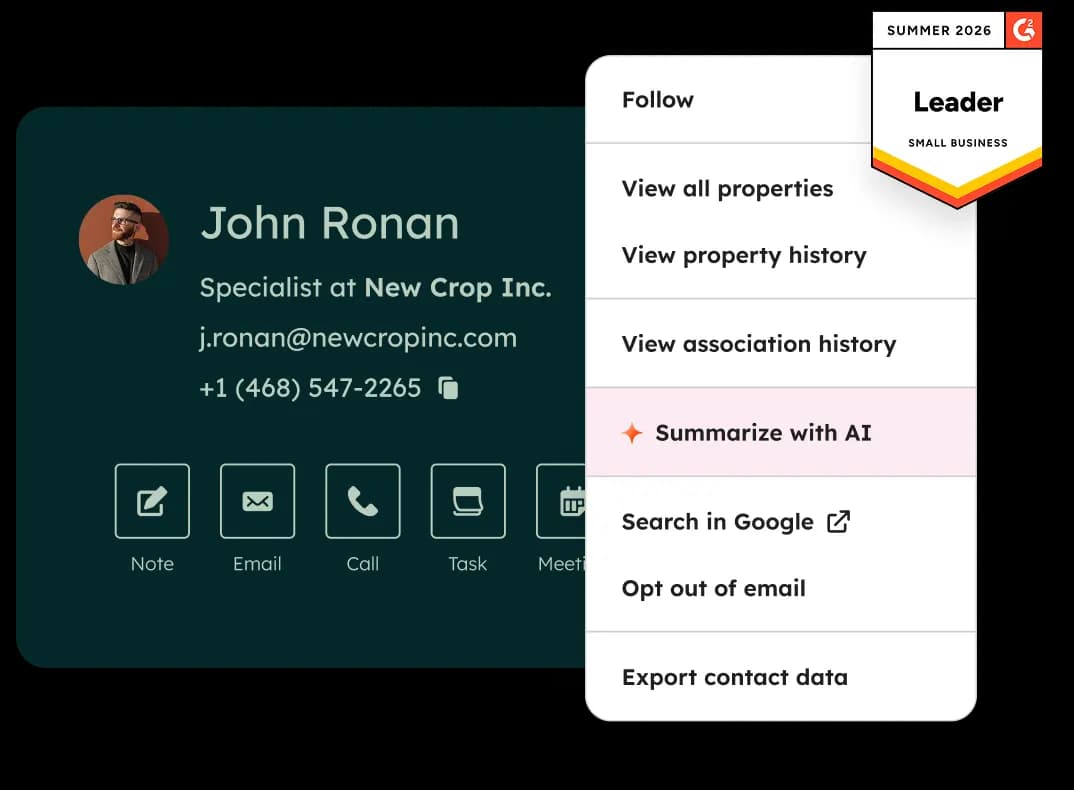
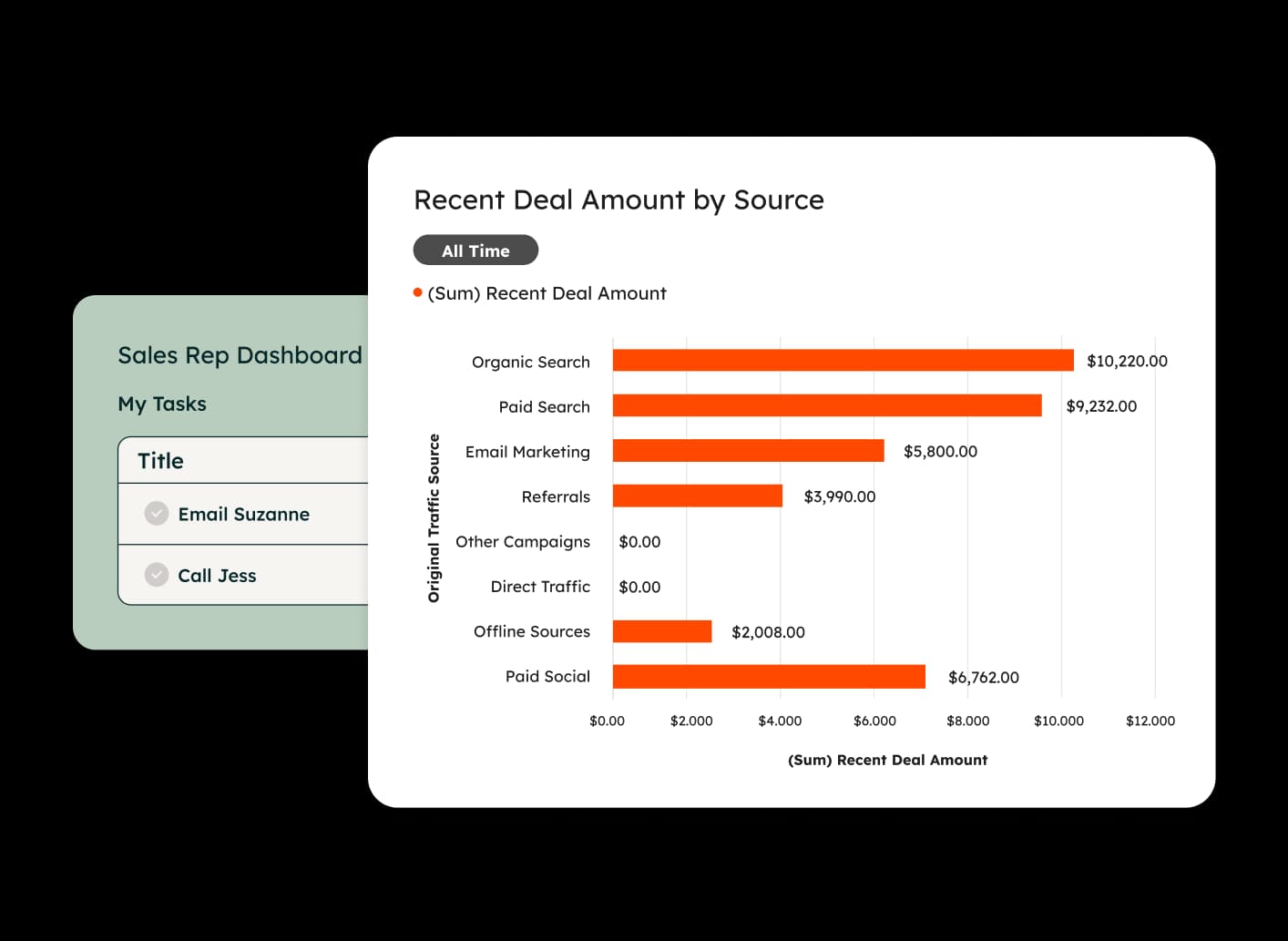
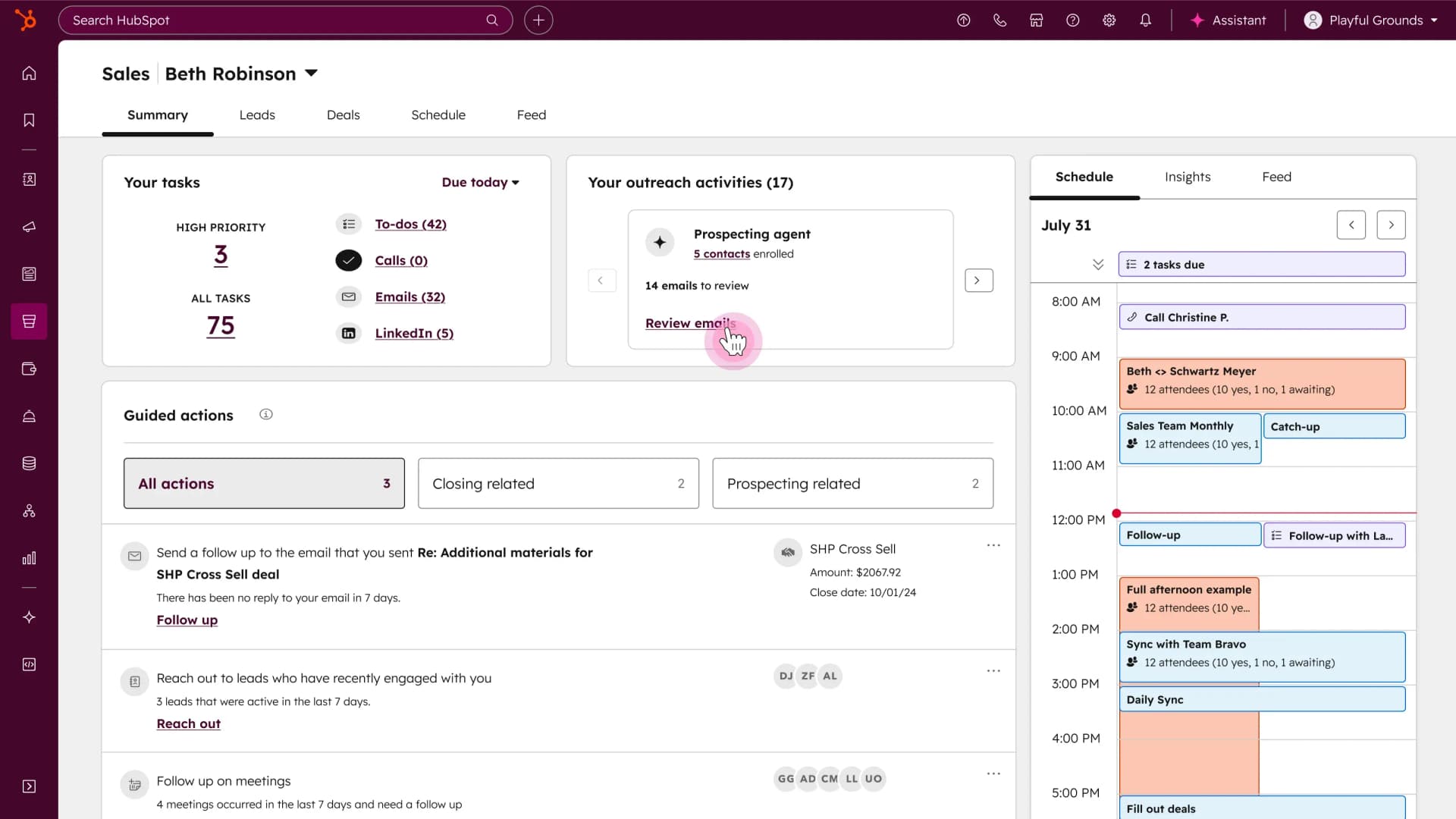
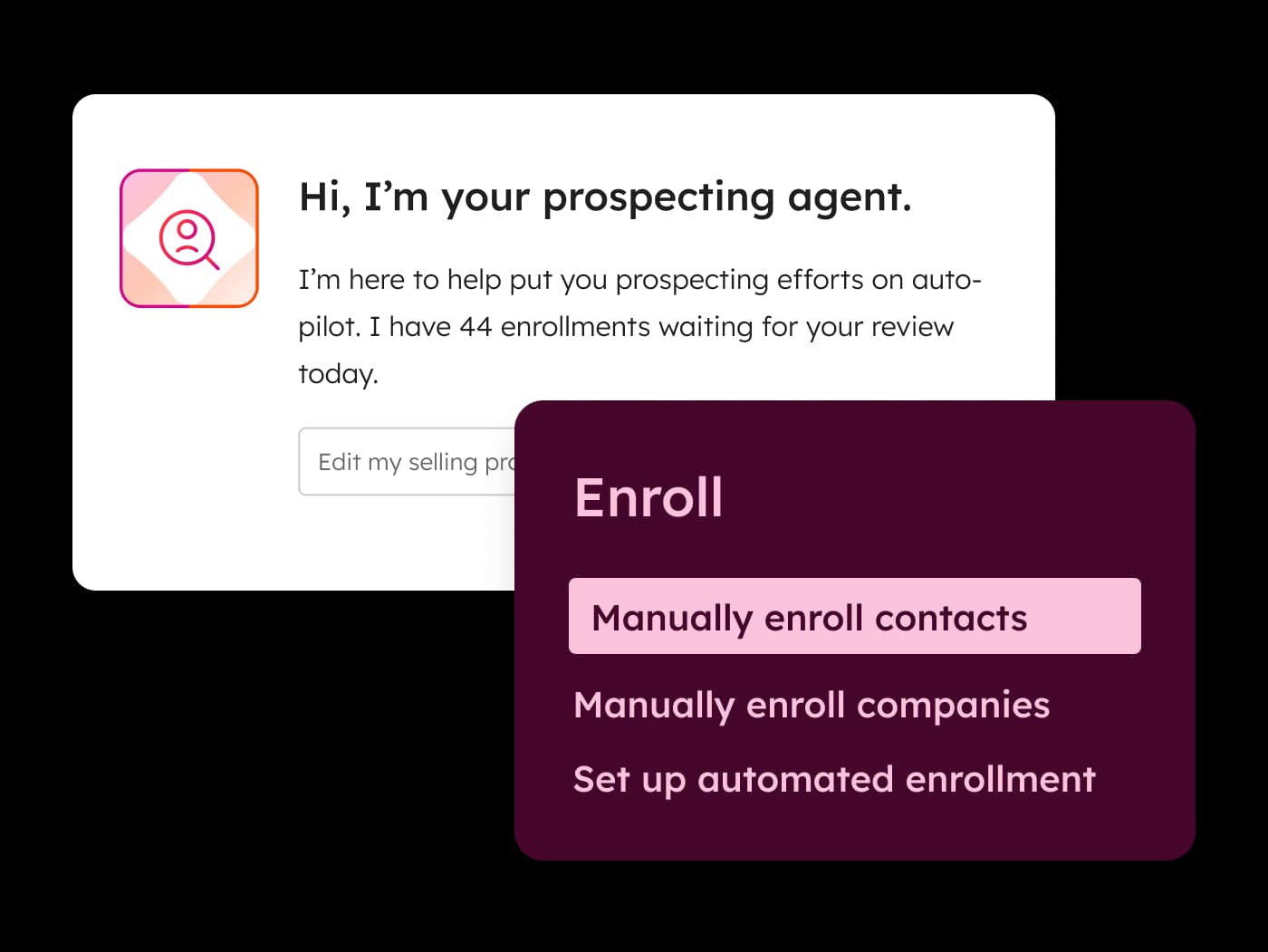
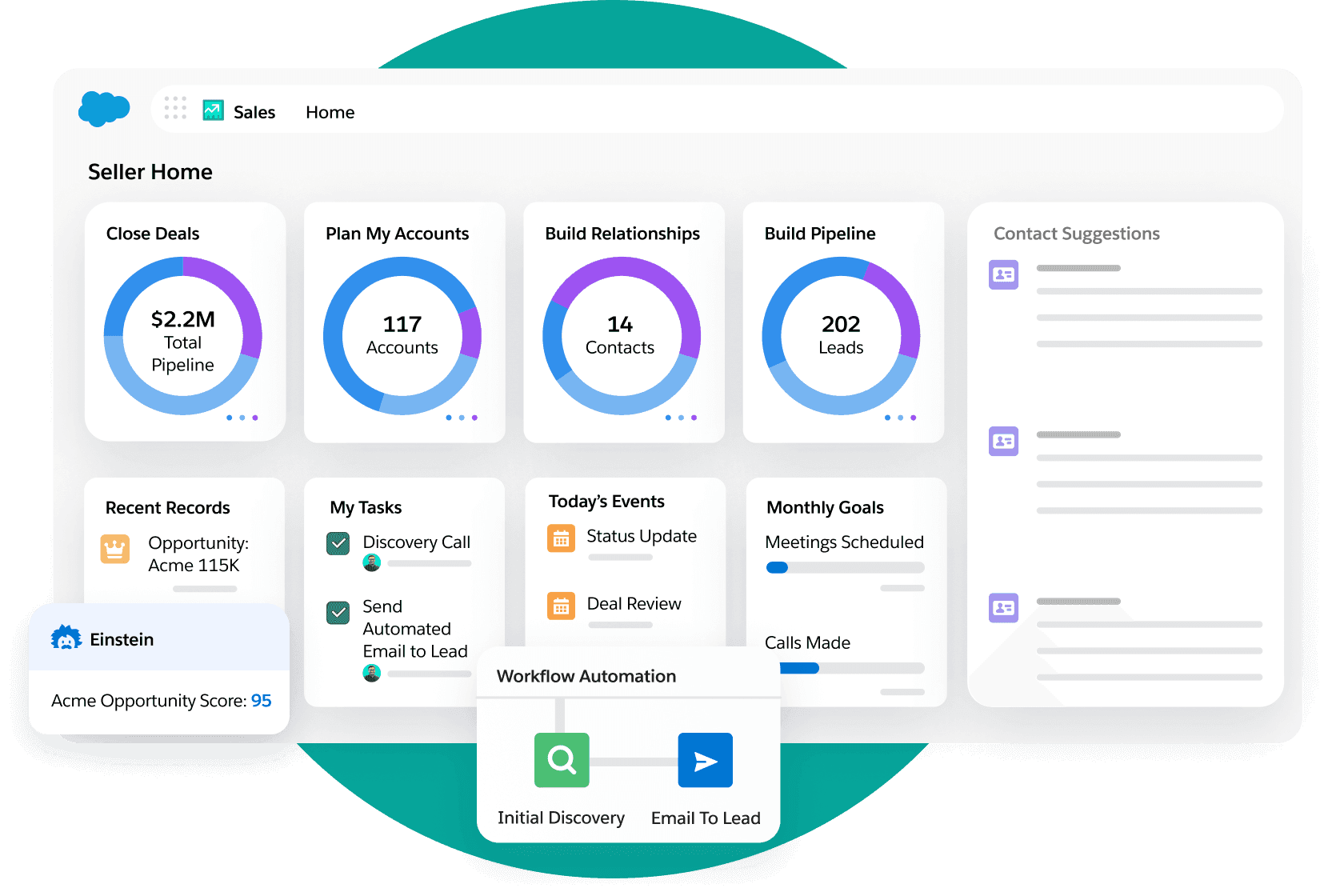
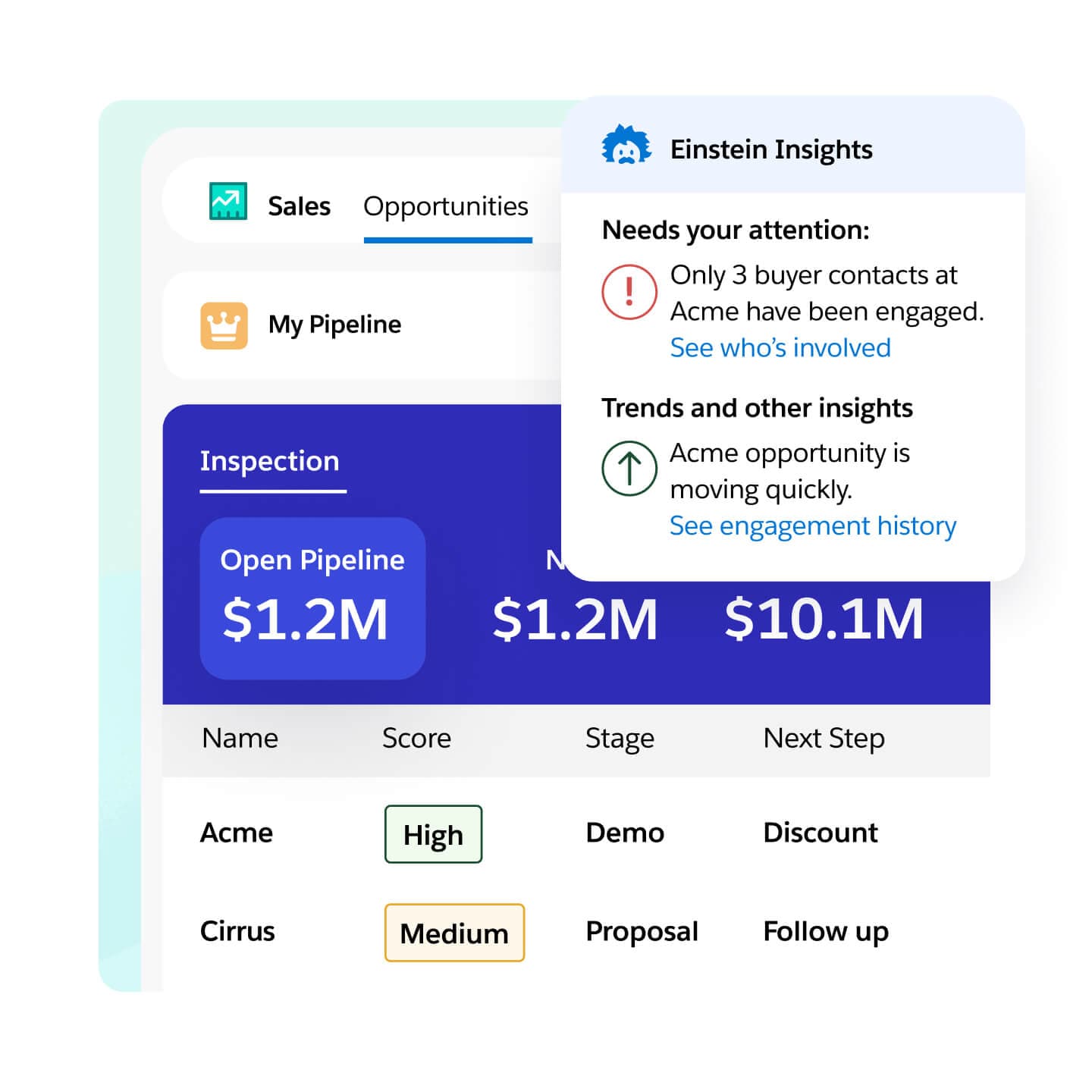
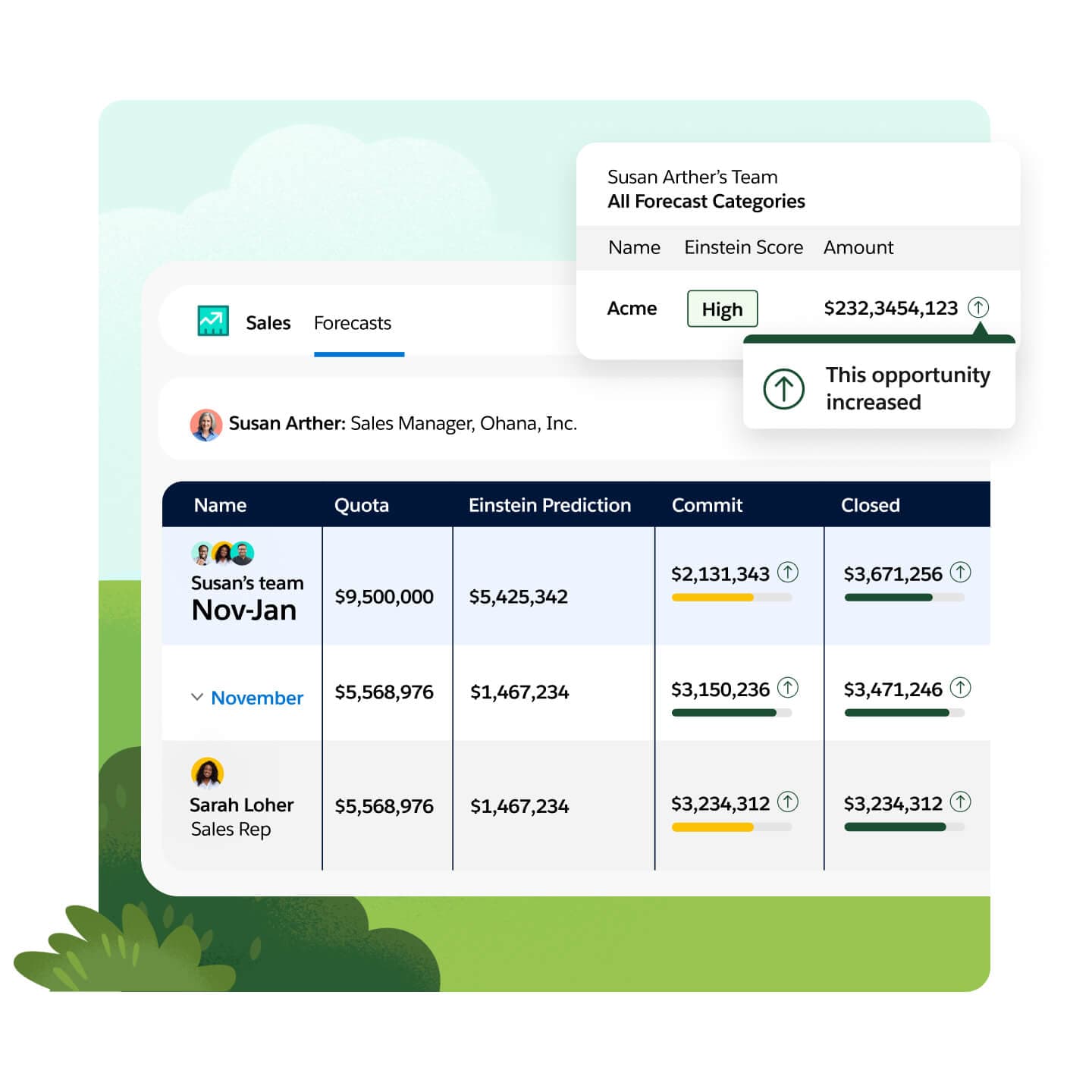
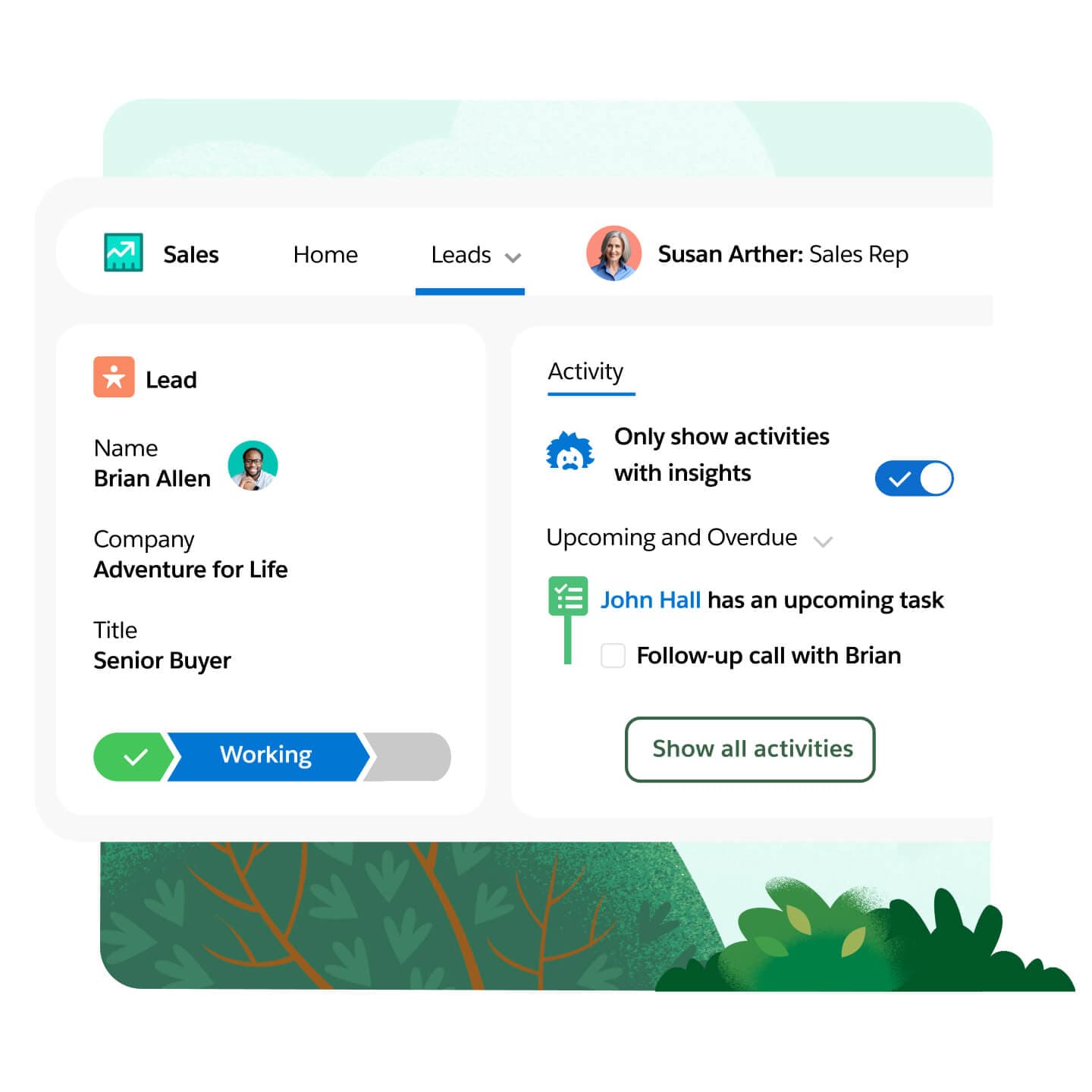
Product screenshots
Real product UI from our media library — no placeholders.
HubSpot
Salesforce
FAQ
- Is HubSpot better than Salesforce?
- HubSpot is the stronger choice for marketing-led companies: one record carries forms, campaign history, sequences and deals, and adoption rarely needs a consultant. Salesforce is the stronger choice when the CRM must bend to an unusual process — custom objects, approval chains, territory logic, sandbox-then-release — and when you want a marketplace and a deep admin hiring pool. Cost behaves differently rather than being higher or lower: HubSpot's Sales Hub Professional lists at $100 per seat/month ($90 annually) plus required $1,500 onboarding, and mixing Smart CRM seats with hub seats is where bills surprise people; Salesforce's ladder steps from $25 Starter Suite to $100 Pro Suite to $175 Enterprise per user/month annually, with agent tooling from $125 per user/month on top. Poor fit for HubSpot: teams whose process needs deep custom objects and governance. Poor fit for Salesforce: teams with no admin capacity, where configuration debt accumulates until reports stop being trusted.
- Which is easier to use?
- HubSpot leads on ease of use (7/10 vs 5/10) from approved product scores grounded in vendor documentation.
- Which CRM fits which team?
- HubSpot: Marketing-led revenue teams keeping campaigns and deals on one record Salesforce: Sales processes needing custom objects, approvals and territories
- Which is stronger for sales automation?
- Salesforce leads on sales automation (8/10 vs 9/10) from approved product scores grounded in vendor documentation.
- Does HubSpot or Salesforce have a free plan?
- HubSpot: Free plan available. Salesforce: Free plan available.
- How does HubSpot vs Salesforce pricing compare?
- HubSpot starts from $15.00/user/mo. Salesforce starts from $25.00/user/mo. Confirm live vendor pricing before purchasing.
- How did SoftwareGlimpse compare these products?
- We map both products to the same category criteria, then evaluate trade-offs using verified product, pricing and feature evidence. Affiliate relationships never change outcomes.
- reviewHubSpot review
- reviewSalesforce review
- pricingHubSpot pricing
- pricingSalesforce pricing
- alternativePipedrive alternative
- alternativeFreshsales alternative
- alternativeDynamics 365 alternative
- guideWhat Is CRM Software? A Complete Beginner’s Guide
- guideHow CRM Software Works: Records, Pipelines & Activity
- guideTypes of CRM Software: Operational, Suites & Sales CRM Shapes
- categoryCRM hub
- finderFind My CRM
- calculatorCost calculator
Related comparisons





Alternatives to consider

Pipedrive
Pipeline-first sales CRM for visual deal management, activity-based selling, and growing sales teams.

Freshsales
Freshworks sales CRM for lead management and pipeline workflows.

Dynamics 365
Microsoft Dynamics 365 Sales CRM for pipeline management, forecasting, and Microsoft 365 / Copilot workflows.
Still deciding between HubSpot and Salesforce?
Use Find My CRM for a shortlist matched to your priorities, or build another side-by-side comparison.
- Independent criterion outcomes
- No invented scores or prices
- Affiliate links never change winners
Some visit links may be affiliate links — we may earn a commission at no extra cost to you. Comparison outcomes are never based on commission.
Part of CRM Software hub · Software comparisons
Try a decision tool
Interactive helpers use recommendation criteria — affiliate status never changes outcomes.