
This video is hosted on YouTube
This content is hosted by YouTube. The player loads only after you allow marketing cookies.
Deflect or resolve support conversations with an AI agent, plus copilot for humans — without pretending the bot replaces a helpdesk core.
At a glance
Deflect repeats; keep exceptions owned
Support agents, team leads, and CX ops
Handoff rules · Agent governance · Observability / transcript review · Outcome / credit pricing
6 products to explore
Fit snapshot
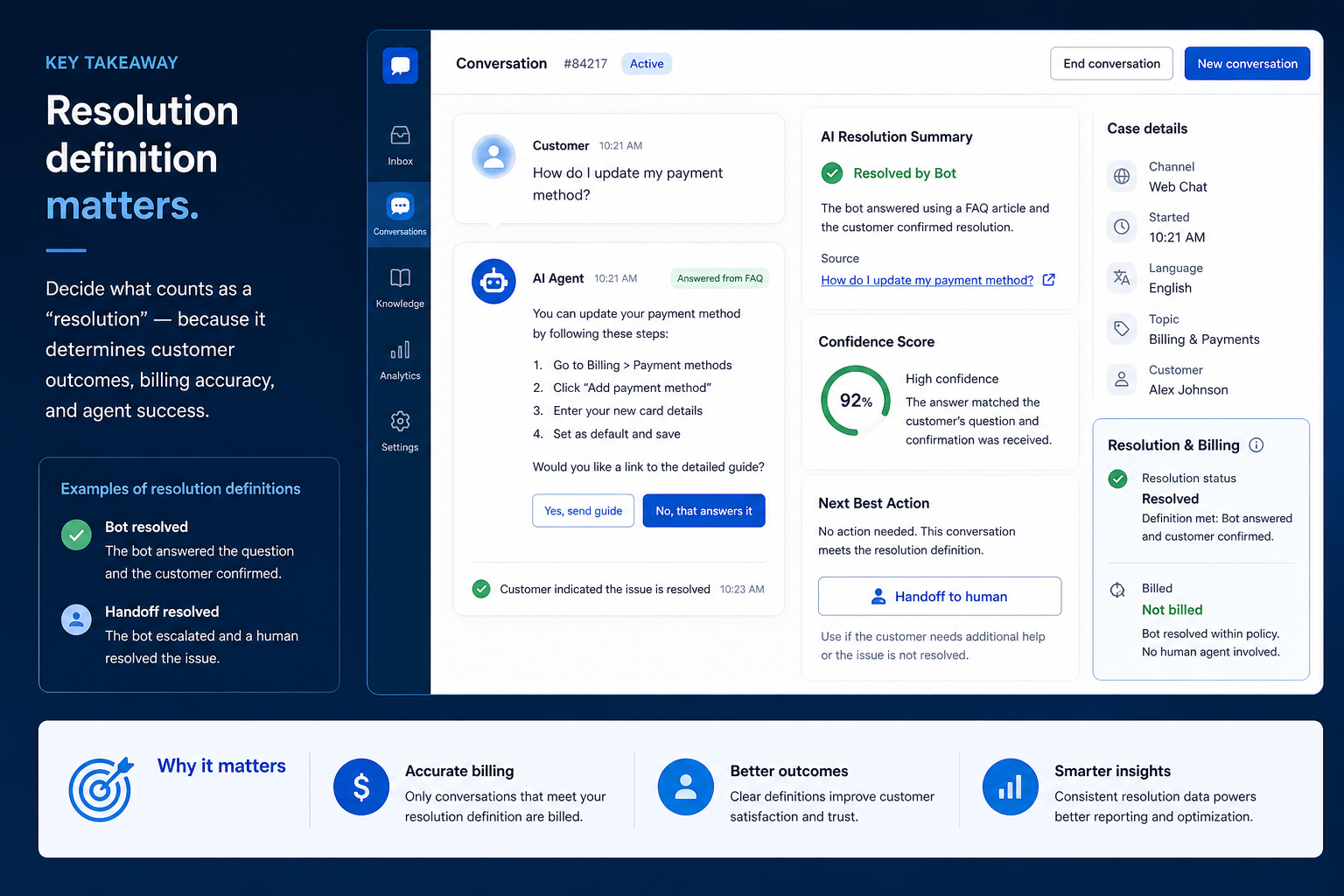
AI customer service is assistance on top of chat or ticketing: resolution bots, outcome-priced agents, and copilots. Score it as a layer inside customer-service-editorial ai-capabilities — agent usefulness plus governance, observability, and credit/outcome TCO — not a separate agentic-CS pillar. A bot without a queue still leaves exceptions unowned. Gartner’s July 2026 Conversational AI Magic Quadrant maps the CAI platform market — use it for category context; SoftwareGlimpse scores products inside job clusters with dated research, not MQ placement.
Support leads who have a working helpdesk or live-chat core and want deflection or agent assist — not a first-time inbox.
How teams put CRM to work for ai
Example 1
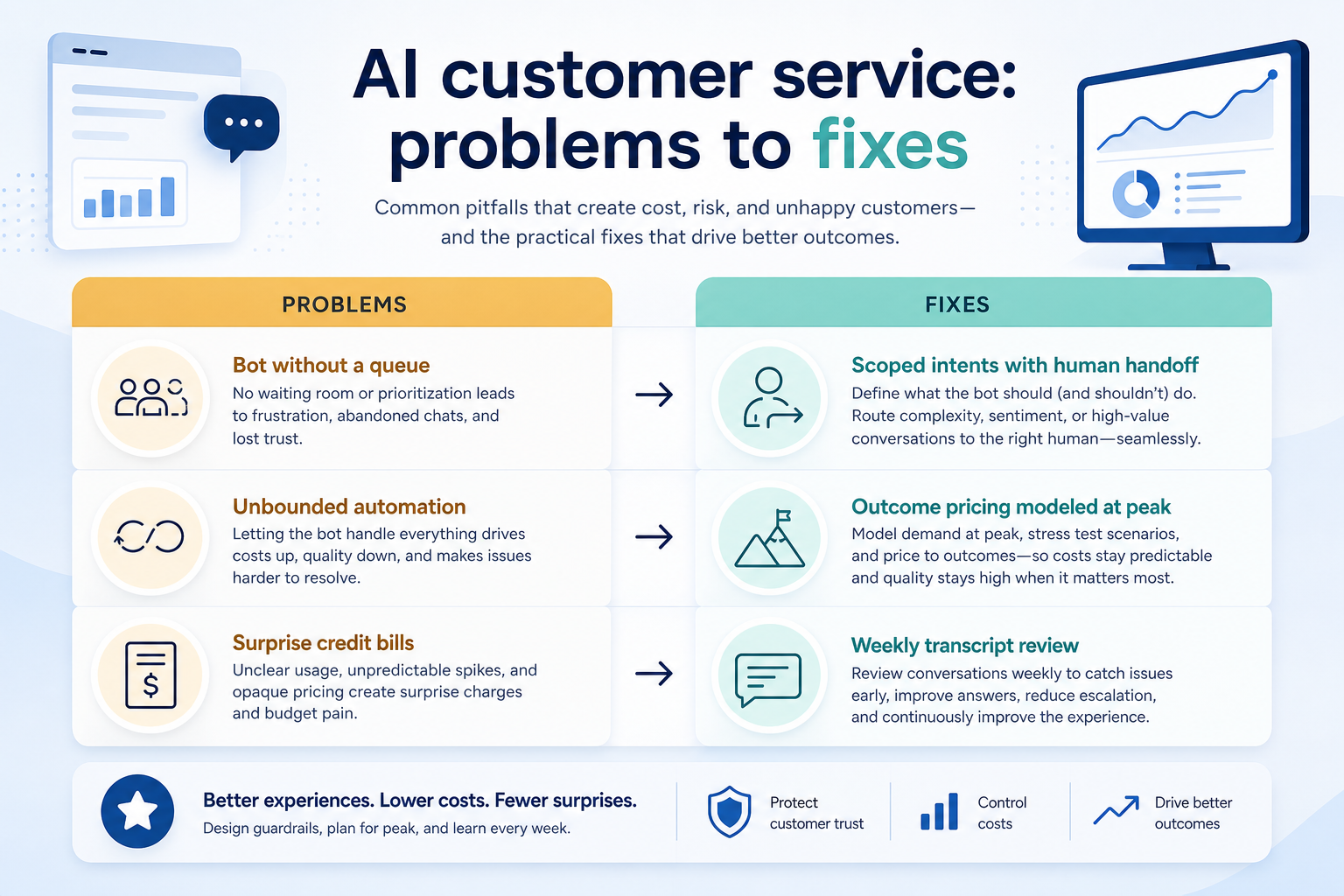
Harbor Shop lets Lyro answer shipping FAQs and hands off refunds to humans. They model credit/conversation cost against peak weeks before turning the bot loose.
Example 2
a Zendesk Suite team pilots AI agents on password-reset macros first — not on billing disputes.
These are the operating problems that usually push teams toward CRM for ai — not feature wish lists.
Without CRM discipline: Leads reconstruct status every week from email and Slack.
Without CRM discipline: A live-chat widget is forced to act like ITSM (or the reverse).
Without CRM discipline: Teams discover channel or macro limits after buying.
Without CRM discipline: Seat tiles hide ticket-cap or AI-outcome overage.
A CRM only helps when the team keeps owners, history, and next steps current. Here is what “good” looks like for ai.
With CRM discipline: A shared queue keeps owners, SLAs, and next steps visible.
With CRM discipline: Shortlist only tools whose primary job matches.
With CRM discipline: Map must-haves to the qualifying plan before purchase.
With CRM discipline: Model agents, conversations, and credits on one worksheet.
Owned conversations
Every open ticket or chat has a person and a next step.
Visible status
Reviews start from the queue, not from Slack archaeology.
Fewer repeat contacts
Docs, macros, and bots deflect the questions you already solved.
Cleaner handoffs
Context stays attached to the ticket, order, or incident.
Prioritise where the bot is allowed to act (governance), how you review handoffs and transcripts (observability), how outcomes/credits are billed, and what happens when it fails. Confirm the plan that includes the AI SKU.
Handoff rules as a buying lens for this use case.
Agent governance as a buying lens for this use case.
Observability / transcript review as a buying lens for this use case.
Start with must-haves your team will use weekly. Treat nice-to-haves as later upgrades — not day-one blockers.
Must-have
Nice-to-have
Understand what needs to happen before comparing how products implement each step. Support overlays use structured research — never video inference.
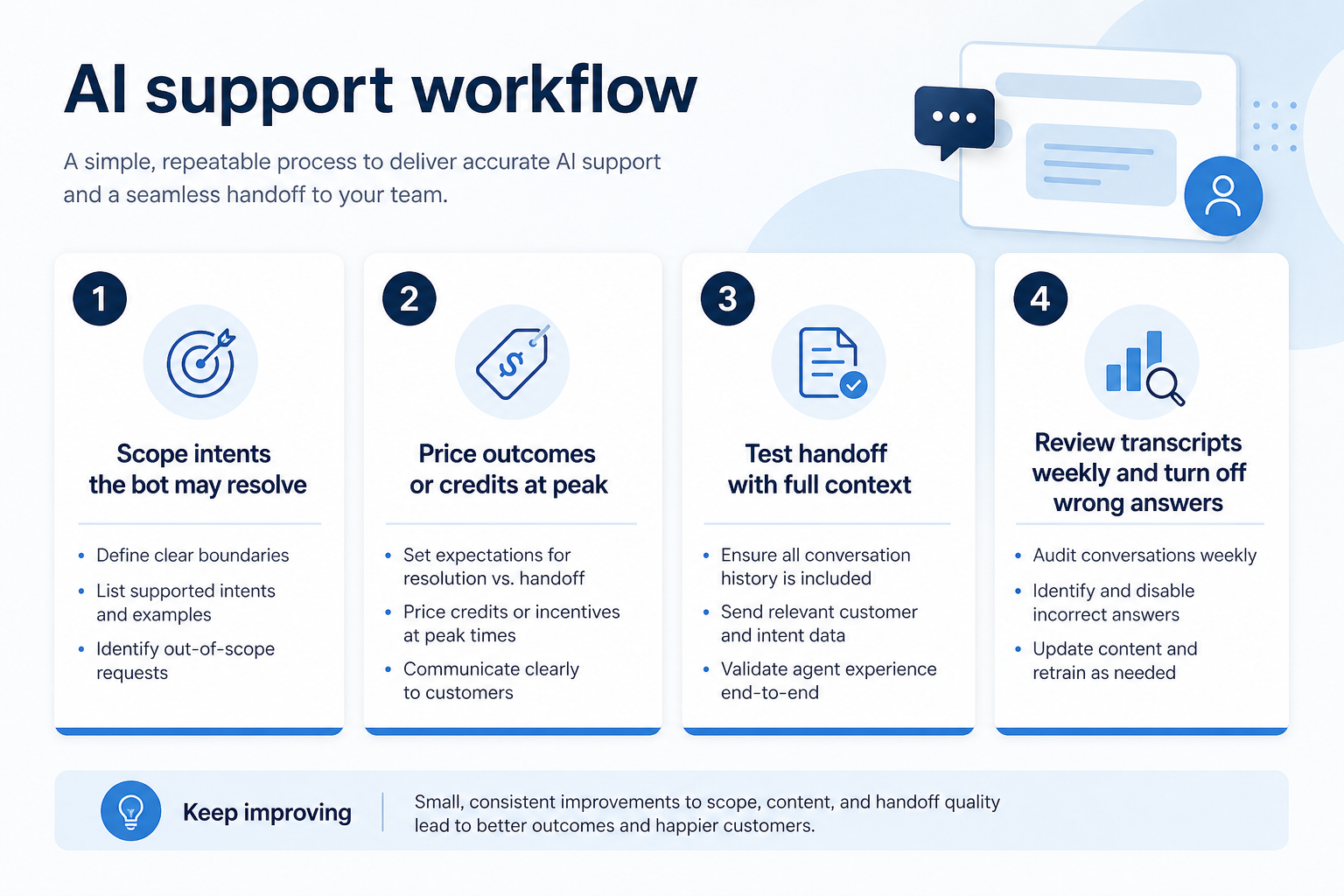
Support labels come from structured feature research — not from videos.
Objective
No unbounded automation.
Next step
Next step
Next step
Official product demonstrations can help show how different CRMs handle the ai workflow. Absence of a video does not mean a product lacks support for this use case.
CometChat
How to Integrate ChatGPT with CometChat
product-ui
This video is hosted on YouTube
This content is hosted by YouTube. The player loads only after you allow marketing cookies.
What this demonstrates
Workflow coverage
Coverage describes what the demo shows — not product support status.
This demonstration does not establish
Source: CometChat · Verified 26 Aug 2026
Compare two products against the same workflow using researched assessments. Official demos help you see the workflow — they do not change support status.
HubSpot
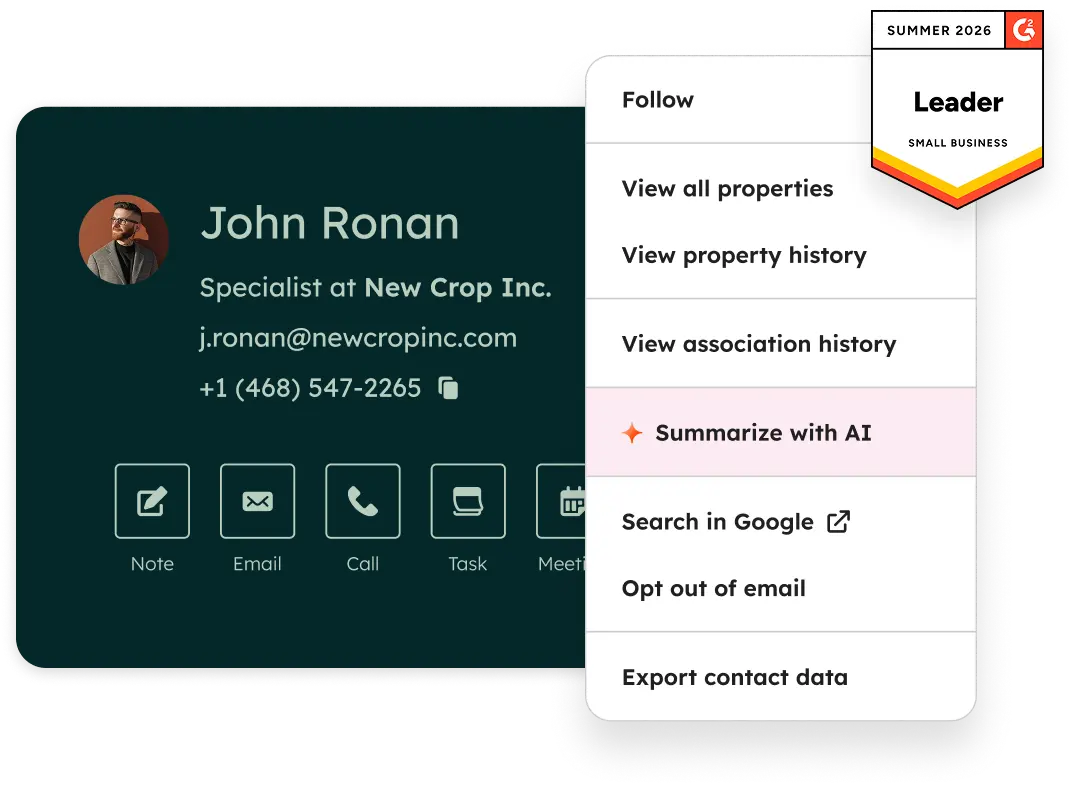
Official Free CRM hero product visualization.
What to notice
Not shown in this demo

Pipedrive
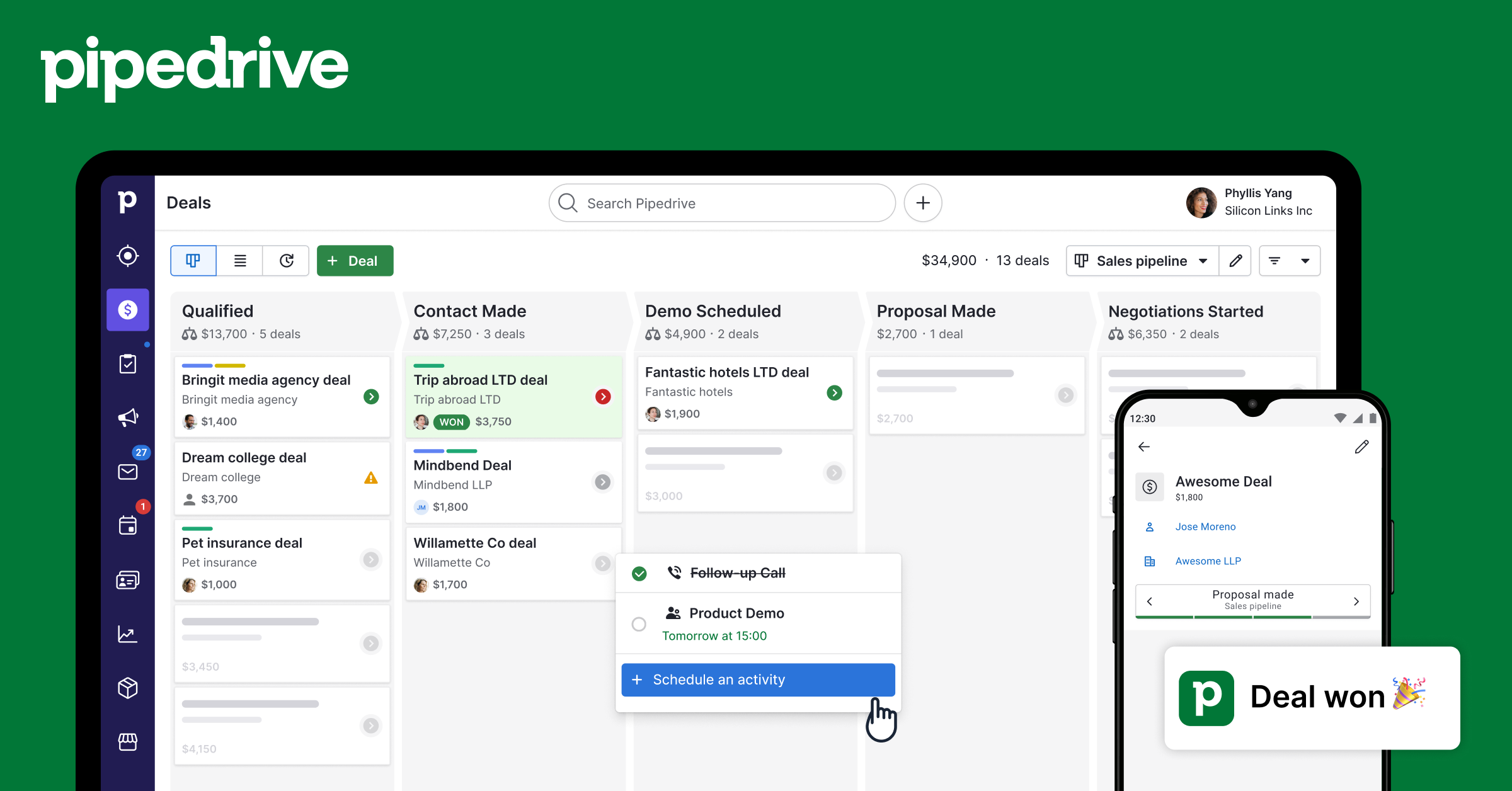
Pipedrive’s sales CRM product view as shown on the official site.
What to notice
Not shown in this demo
Canonical feature assessments for this workflow — not inferred from demos.
| Step | HubSpot | Pipedrive |
|---|---|---|
| Scope the bot | Unknown | Unknown |
| Price outcomes | Unknown | Unknown |
| Test handoff | Unknown | Unknown |
| Review quality | Unknown | Unknown |
Based on the ai workflow, buyers commonly evaluate the checklist below. Nothing is written to your decision profile until you confirm in the tool.
Context: useCase=ai-customer-service — tools apply this only after your confirmation.
Best when
This use case is the blocking weekly ritual.
Best when
Another customer-service cluster is primary — keep this tool on a separate shortlist.
Catalogue products that list ai customer service as a supported use case. Inclusion here is not a ranking. Official demo counts never change ranking.
Live Chat
Live chat and AI messaging — Starter $24.17/mo annual (100 billable convos); Growth from $49.17. Primary live-chat; CS secondary.

Live Chat
Omnichannel messaging with Hugo AI — Free (2 seats); Mini $45; Essentials $95; Plus $295/workspace/mo. Primary live-chat; CS secondary.

Live Chat
Customer messaging / shared inbox with Fin AI — Essential from $29/seat/mo + Fin from $0.99/outcome. Primary live-chat; BC + CS secondary.

Helpdesk Ticketing
Enterprise helpdesk and Suite omnichannel — Support Team from $19/agent/mo annual; Suite Team $55, Suite Pro $115.

Live Chat
Freshworks live chat — free up to 10 agents; Growth $19, Pro $49, Enterprise $79 agent/mo annual. Primary live-chat; CS secondary.
Live Chat
In-app chat SDK/API with UI kits — Build free (100 MAU); Basic from ~$239/mo annual at 1k MAU tier.
In the current customer-service catalogue wave, explore: zendesk-suite, gorgias, freshchat, cometchat, tidio scored on CS ai-capabilities; intercom Fin is BC-primary adjacency. Related products appear when those soft entries are seeded and tagged.
No. Fit depends on job cluster, agent count, and plan gates. Use the Best customer service software page for methodology-based editor’s picks inside clusters — not one undifferentiated ranking.
Talk to website visitors in real time and route chats to the right agent.
Publish help articles and portals so customers can solve issues without a ticket.
Use Finder for a fit-based shortlist, compare products, or build a requirements checklist before demos.
How we review
Evaluation, verification, and refresh — no fake testing claims.
Editorial methodology
Category criteria and scores grounded in evidence.
Editorial policy
Authorship, evidence levels, scoring, and disclosures.
Corrections
Spot something outdated? Tell us.
Want clearer software shortlists? Get buying guides and comparisons by email.
Newsletter coming soon.