
This video is hosted on YouTube
This content is hosted by YouTube. The player loads only after you allow marketing cookies.
Launch a branded online store with catalog, checkout, and payments — instead of stitching a brochure site to a payment link.
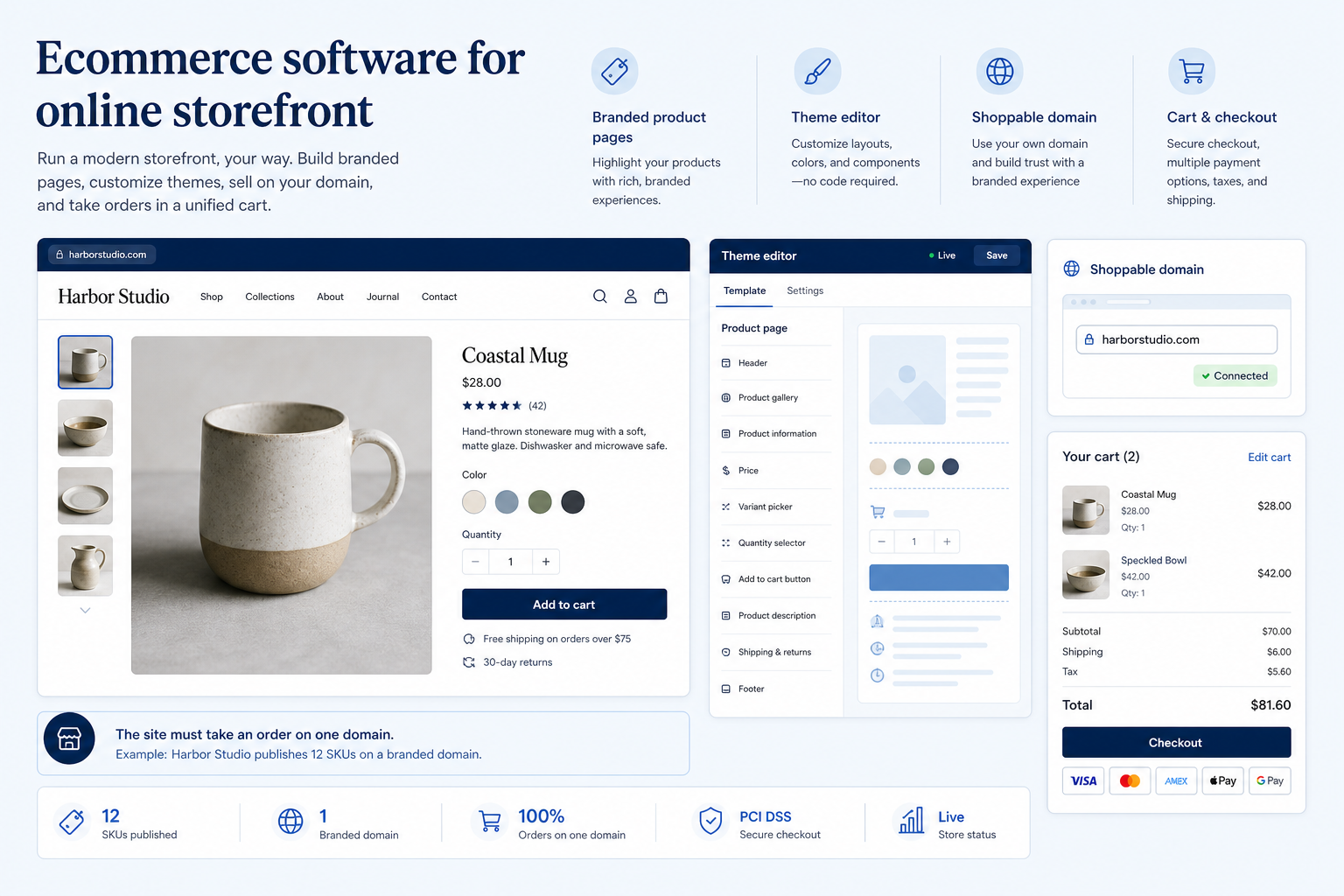
At a glance
A branded store customers can browse and complete an order on
DTC merchants, SMB operators, and WordPress store owners
Theme / editor on the quoted plan · Catalog to checkout completeness · Payments and tax handling · Apps / extensions TCO
9 products to explore
Fit snapshot
Online storefront is the job of publishing a buyer-facing shop: themes, product pages, domains, cart, and checkout that a merchant can operate without rebuilding the store for every campaign. Hosted SaaS platforms and open-source carts both do this job — they fail for different hosting and TCO reasons.
DTC brands, SMB merchants, and WordPress operators whose blocking job is a live store customers can browse and buy from — not a POS-first or supplier-import app.
How teams put CRM to work for online storefront
Example 1
Harbor Studio moves from Instagram checkout links to a branded store. Every product has a page, cart, and paid order — so Friday launches no longer depend on a founder DMing invoices.
Example 2
a WordPress publisher adds a cart plugin on existing hosting so the blog and store share one domain — then prices hosting, SSL, and paid extensions as one configuration.
These are the operating problems that usually push teams toward CRM for online storefront — not feature wish lists.
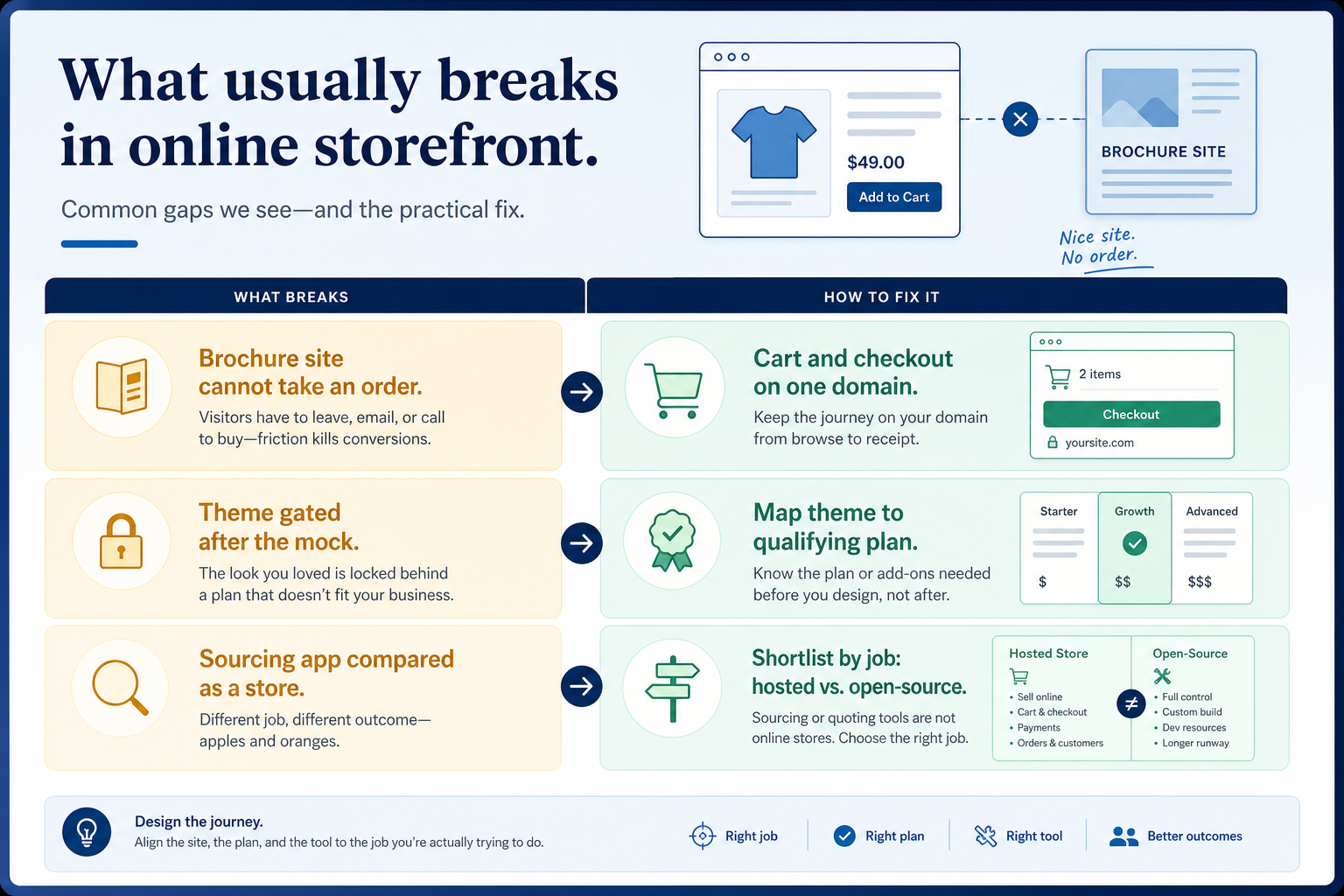
Without CRM discipline: Buyers leave to pay by invoice, DM, or a third-party link.
Without CRM discipline: The mock looked complete; the paid plan is what you actually need.
Without CRM discipline: A sourcing app is compared as if it were a store, or POS is treated as a SaaS peer.
Without CRM discipline: The starter tile ignores payment processing, themes, and plugins.
A CRM only helps when the team keeps owners, history, and next steps current. Here is what “good” looks like for online storefront.
With CRM discipline: A storefront with cart and checkout keeps browse-to-pay on one domain.
With CRM discipline: Map theme, checkout, and channel features to the qualifying plan before you buy.
With CRM discipline: Shortlist hosted platforms against hosted platforms, and open-source carts against open-source.
With CRM discipline: Price the configuration you will run — subscription plus processing plus extensions.
A live branded store
Customers reach products, cart, and checkout on your domain.
Owned order records
Each paid order has a status the merchant can fulfil from.
Repeatable merchandising
Collections and themes change without rebuilding the site.
Honest configuration TCO
Hosting, apps, and processing sit on the same buying sheet.
Prioritise theme and editor quality, catalog-to-checkout completeness, and channel apps on the plan you will actually buy. Model hosting plus extensions separately if you choose an open-source cart.
Theme / editor on the quoted plan as a buying lens for this use case.
Catalog to checkout completeness as a buying lens for this use case.
Payments and tax handling as a buying lens for this use case.
Apps / extensions TCO as a buying lens for this use case.
Hosting vs SaaS ownership as a buying lens for this use case.
Start with must-haves your team will use weekly. Treat nice-to-haves as later upgrades — not day-one blockers.
Must-have
Nice-to-have
Understand what needs to happen before comparing how products implement each step. Support overlays use structured research — never video inference.
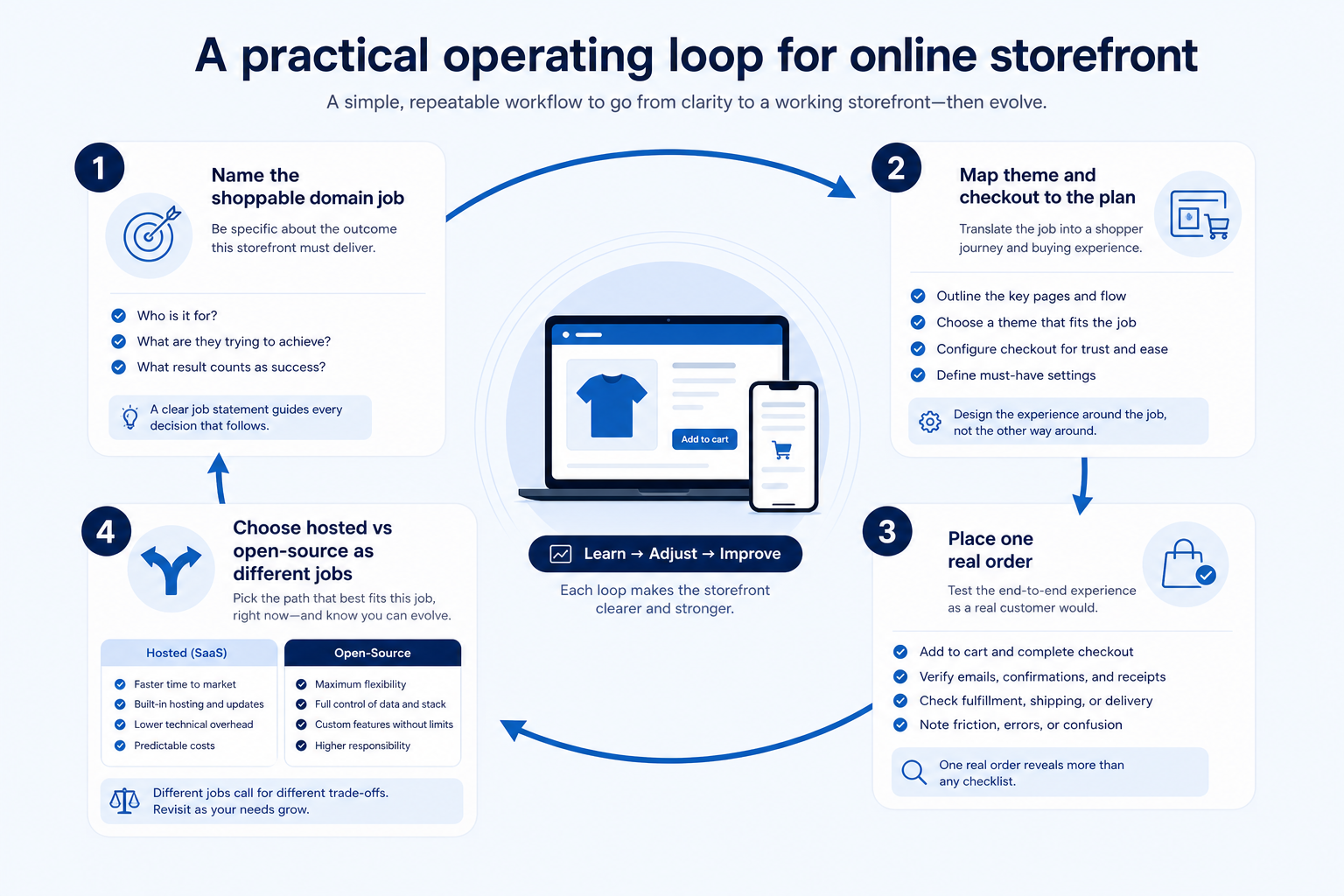
Support labels come from structured feature research — not from videos.
Objective
A URL a buyer can open.
Next step
Next step
Next step
Official product demonstrations can help show how different CRMs handle the online storefront workflow. Absence of a video does not mean a product lacks support for this use case.

WooCommerce
How to set up WooCommerce: quick tour of the admin dashboard
How WooCommerce presents the product in an official vendor video.
This video is hosted on YouTube
This content is hosted by YouTube. The player loads only after you allow marketing cookies.
What this demonstrates
Workflow coverage
Coverage describes what the demo shows — not product support status.
What to notice
This demonstration does not establish
Features visible in this demo
Source: WooCommerce · Verified 18 Aug 2026

Ecwid
How to Build an Online Store in just a few clicks - Quick Start Guide
How Ecwid presents the product in an official vendor video.

This video is hosted on YouTube
This content is hosted by YouTube. The player loads only after you allow marketing cookies.
What this demonstrates
Workflow coverage
Coverage describes what the demo shows — not product support status.
What to notice
This demonstration does not establish
Features visible in this demo
Source: Ecwid / Lightspeed · Verified 18 Aug 2026

Salesforce Commerce Cloud
Multi-Site Management Strategies | B2C Commerce
How Salesforce Commerce Cloud presents the product in an official vendor video.

This video is hosted on YouTube
This content is hosted by YouTube. The player loads only after you allow marketing cookies.
What this demonstrates
Workflow coverage
Coverage describes what the demo shows — not product support status.
What to notice
This demonstration does not establish
Features visible in this demo
Source: Salesforce · Verified 18 Aug 2026
Compare two products against the same workflow using researched assessments. Official demos help you see the workflow — they do not change support status.

HubSpot
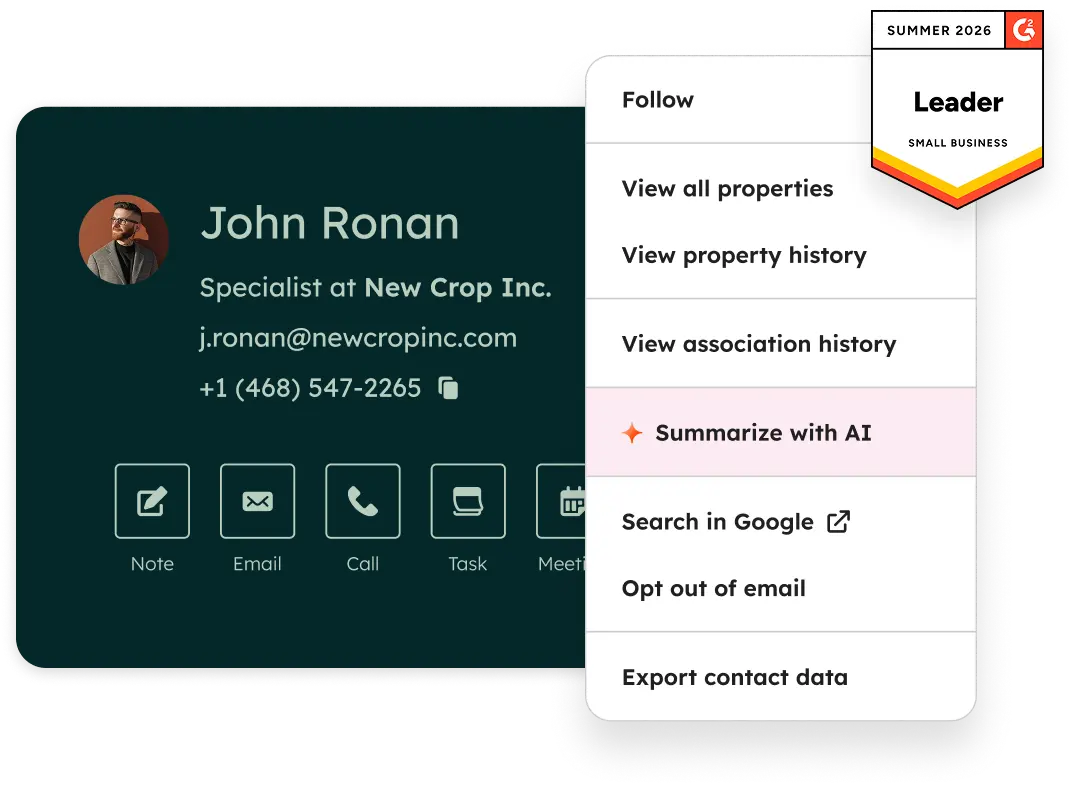
Official Free CRM hero product visualization.
What to notice
Not shown in this demo

Pipedrive
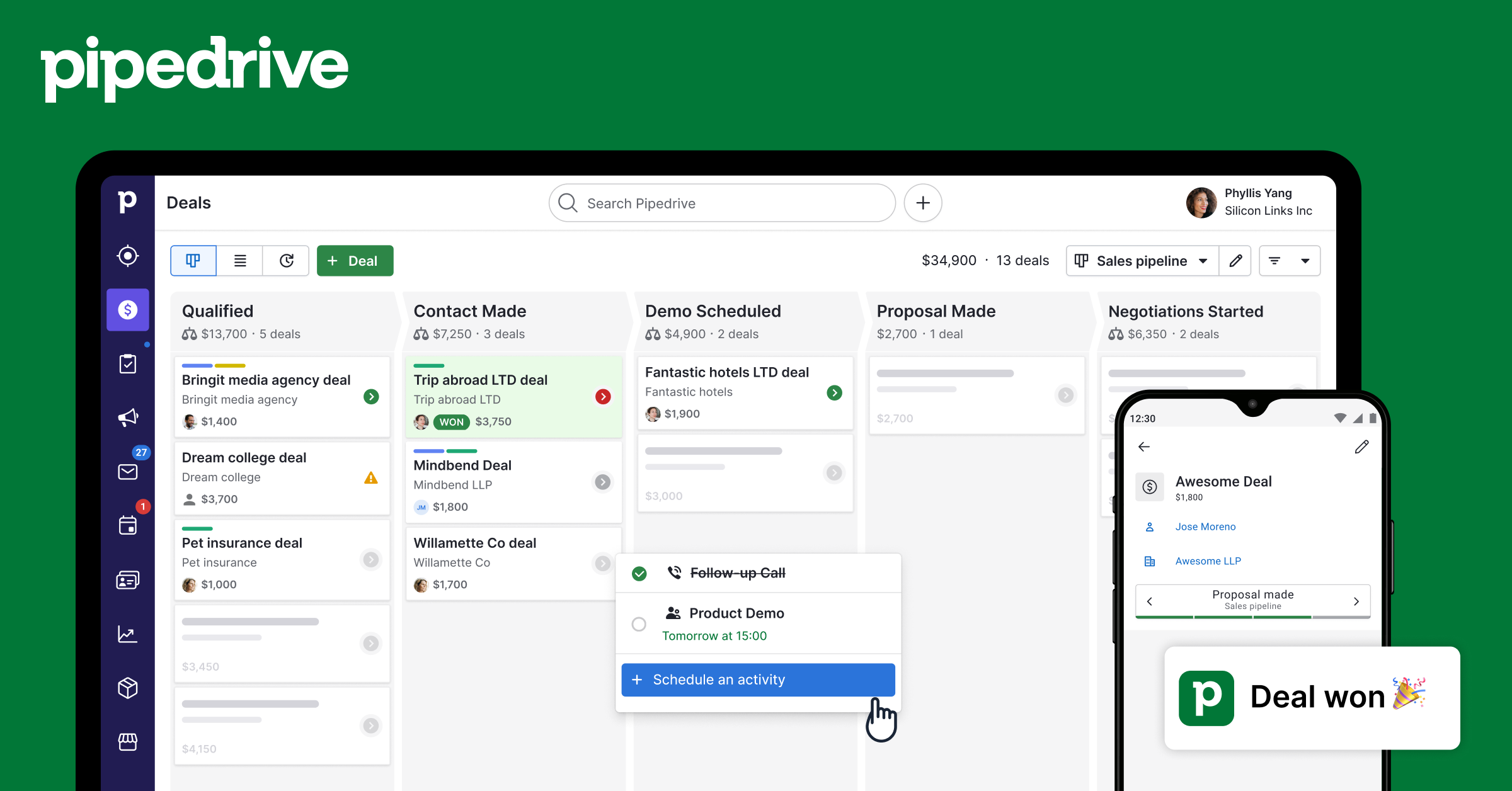
Pipedrive’s sales CRM product view as shown on the official site.
What to notice
Not shown in this demo
Canonical feature assessments for this workflow — not inferred from demos.
| Step | HubSpot | Pipedrive |
|---|---|---|
| Launch the store | Unknown | Unknown |
| Stock the catalog | Unknown | Unknown |
| Turn on checkout | Unknown | Unknown |
| Operate weekly | Unknown | Unknown |
Based on the online storefront workflow, buyers commonly evaluate the checklist below. Nothing is written to your decision profile until you confirm in the tool.
Context: useCase=online-storefront — tools apply this only after your confirmation.
Best when
You want an all-in-one storefront, checkout, and channels without running hosting.
Best when
You already own a WordPress site and will model hosting plus extension TCO.
Catalogue products that list online storefront as a supported use case. Inclusion here is not a ranking. Official demo counts never change ranking.

Ecommerce
Hosted SaaS ecommerce platform with themes, checkout, channels, and POS — Basic from $39/mo ($29 annual), Grow $105 ($79 annual), Advanced $399 ($299 annual), Plus from $2,300/mo.

Ecommerce
Open-SaaS ecommerce platform — Core $39/mo ($29 annual), Growth $105 ($79), Scale $399 ($299); GMV thresholds and open payment provider fees apply on 2026 plans.
Ecommerce
Open-source WordPress commerce plugin — free core; paid extensions, hosting, and WooPayments processing are separate TCO lines.

Ecommerce
Square ecosystem online store — Free $0/mo (higher online processing), Plus $49/location, Premium $149/location; 30-day trials on paid tiers.

Ecommerce
Open-source Magento core (free) plus Adobe Commerce enterprise licenses (GMV quote) — deep catalog/B2B with high hosting and agency TCO.

Ecommerce
Website-first builder with ecommerce from Core — Light $17/mo annual, Core $29 (sell online), Business $39, Business Elite $159 (annual tiles; monthly higher).

Ecommerce
Design-led website builder with commerce — Basic $16, Core $23, Plus $39, Advanced $99/mo annual (US 2026 tiles); platform transaction fees vary by plan.
Ecommerce
Embeddable storefront you add to an existing site — Starter $5/mo, Venture $29 annual, Business $49, Unlimited $119 (post 2 Mar 2026 tiles); no Ecwid transaction fees.
Ecommerce
Salesforce B2C Commerce (ex-Demandware) — Growth/Plus/Premium are GMV-percent quote only; enterprise SaaS landscape, not an SMB Shopify substitute.
In the current ecommerce catalogue wave, explore: shopify, bigcommerce, woocommerce, square-online. Related products appear when those soft entries are seeded and tagged.
No. Fit depends on job cluster, channels, and plan gates. Use the Best ecommerce software page for methodology-based editor’s picks inside clusters — not one undifferentiated ranking across storefront platforms and sourcing apps.
No. Sourcing apps import supplier catalogs into an existing store. Shortlist them under dropshipping sourcing — not as a substitute for a hosted or open-source storefront.
Manage products, variants, collections, and merchandising at scale.
Optimize cart, checkout, and payments to convert more orders.
Sell online and in person with unified catalog, payments, and inventory.
Use Finder for a fit-based shortlist, compare products, or build a requirements checklist before demos.
How we review
Evaluation, verification, and refresh — no fake testing claims.
Editorial methodology
Category criteria and scores grounded in evidence.
Editorial policy
Authorship, evidence levels, scoring, and disclosures.
Corrections
Spot something outdated? Tell us.
Want clearer software shortlists? Get buying guides and comparisons by email.
Newsletter coming soon.