
Hr
Enterprise HCM default — custom PEPM quote (no published seat $); implementation-led. Landscape only vs SMB HRIS/payroll.
Run a Workday-class people system — HR, payroll, talent, and often WFM — for 1,000+ employee organisations.
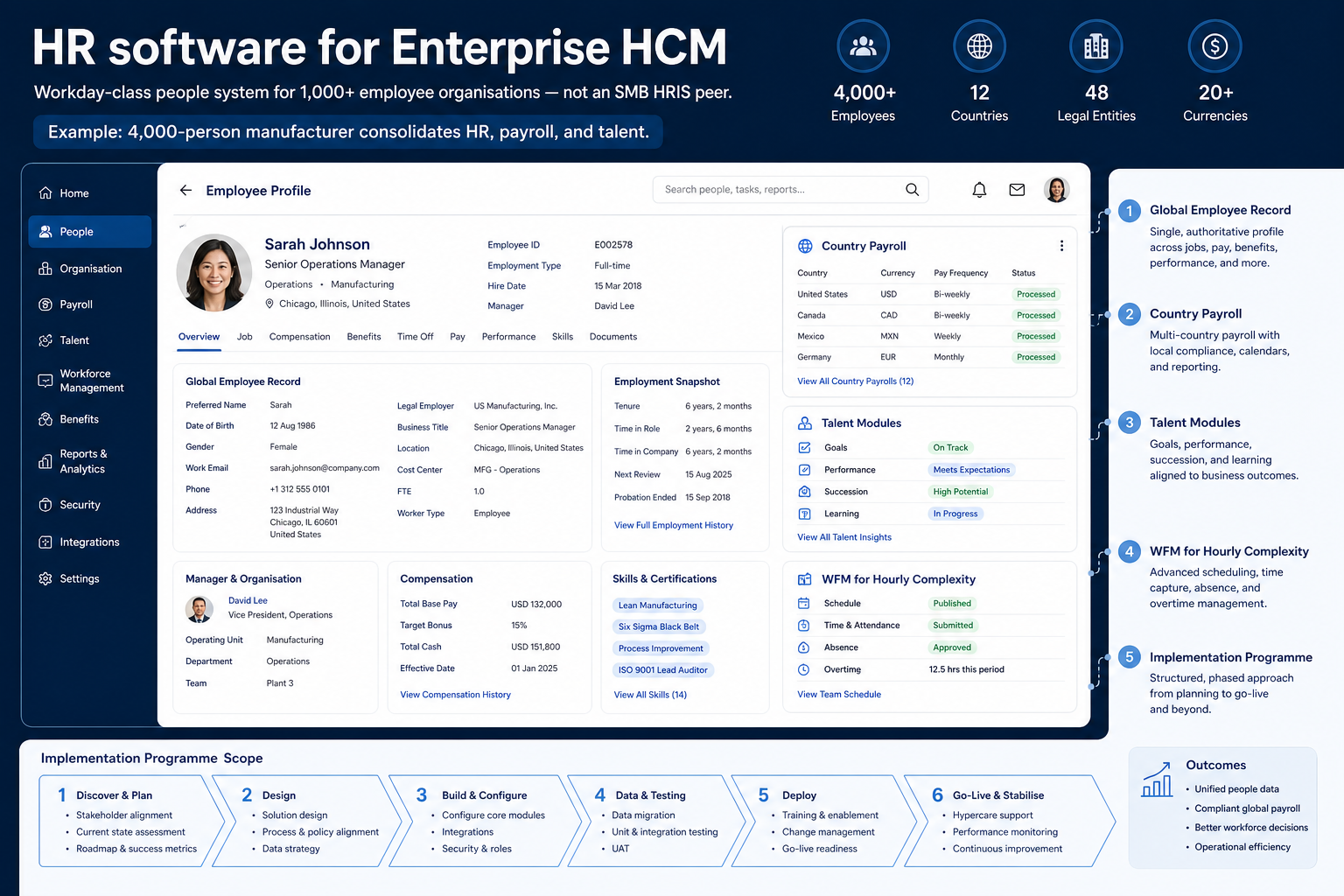
At a glance
One enterprise people system of record
HR, ops, recruiting, and frontline managers
Global HR / localisation · Payroll + time on one record · Implementation TCO · WFM depth (if hourly)
4 products to explore
Fit snapshot
Enterprise HCM is the job of running a full human capital suite for large organisations: global HR, payroll, talent, and often workforce management. Implementation and custom quotes dominate TCO — these are not SMB HRIS or published-PEPM payroll peers.
CHRO, HRIS, payroll, and transformation leaders at mid-market-to-enterprise organisations (typically 1,000+ employees) replacing or consolidating people systems.
How teams put HR software to work for enterprise hcm
Example 1
a 4,000-person manufacturer consolidates HR, payroll, and talent onto one HCM so country payroll and manager self-service share one employee record.
Example 2
a hospital system evaluates UKG Pro when complex 24/7 scheduling must live in the same HCM as payroll — not a Connecteam-class frontline app.
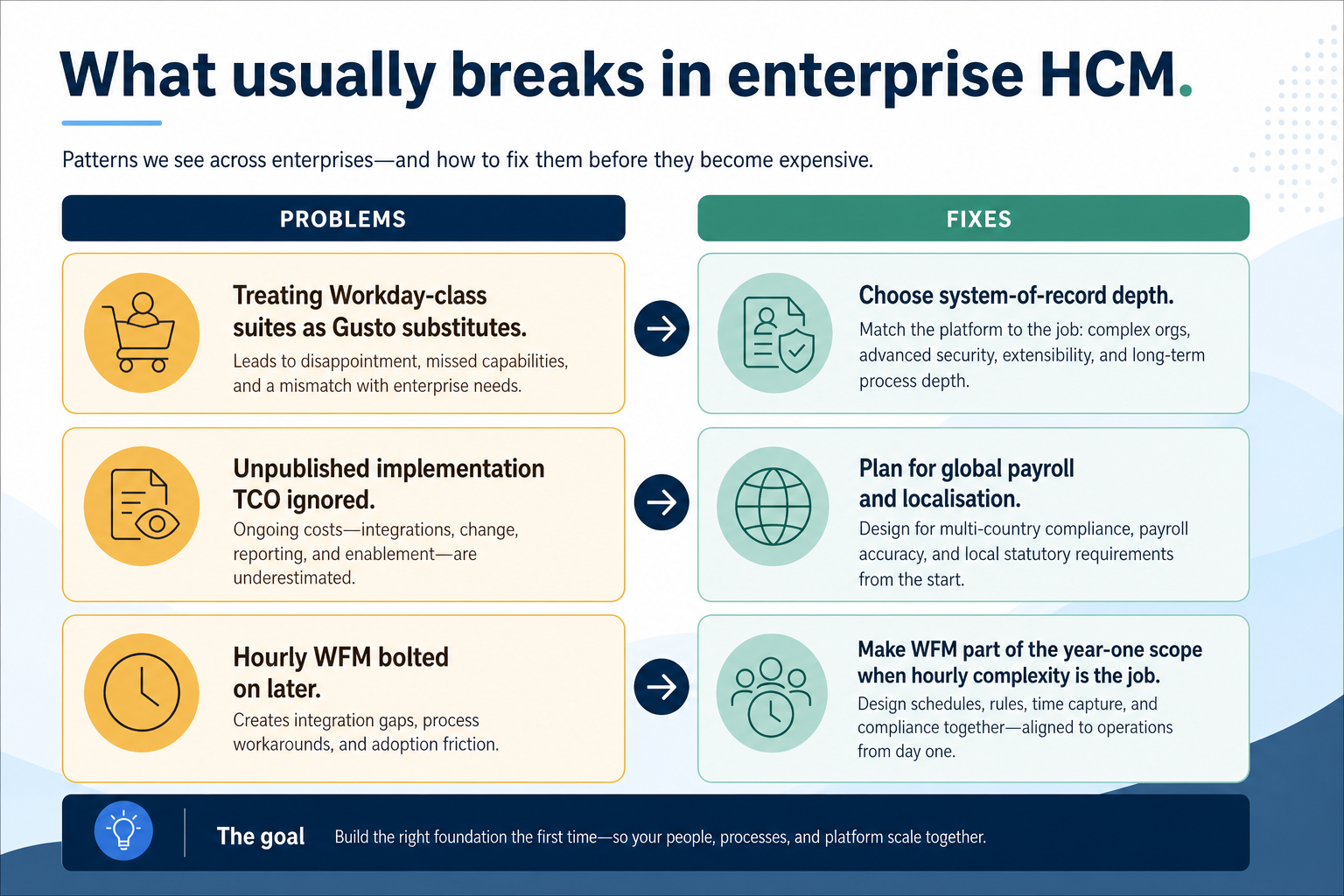
These are the operating problems that usually push teams toward HR software for enterprise hcm — not feature wish lists.
Without HR / workforce discipline: Managers reconstruct status every week.
Without HR / workforce discipline: People ignore the tool after launch.
Without HR / workforce discipline: Teams discover limits after buying.
Without HR / workforce discipline: An ATS is forced to act like a time clock (or the reverse).
Fit depends on operating the HR software with clear owners and hygiene. Here is what “good” looks like for enterprise hcm.
With the right HR / workforce setup: A shared system keeps owners and status visible.
With the right HR / workforce setup: Mobile-ready workflows and a short weekly ritual.
With the right HR / workforce setup: Map must-haves to the qualifying plan before purchase.
With the right HR / workforce setup: Shortlist only tools whose primary job matches.
Owned workflows
Every active item has a person and a next step.
Visible status
Reviews start from the system, not from SMS.
Fewer manual chasers
Publishing and notifications reduce pinging.
Cleaner handoffs
Context stays attached to the hiring, shift, or training record.
Prioritise system-of-record depth, global payroll/localisation, WFM if hourly complexity is the job, and implementation TCO. Do not shortlist these as Gusto or BambooHR substitutes.
Global HR / localisation as a buying lens for this use case.
Payroll + time on one record as a buying lens for this use case.
Implementation TCO as a buying lens for this use case.
Start with must-haves your team will use weekly. Treat nice-to-haves as later upgrades — not day-one blockers.
Must-have
Nice-to-have
Required when complex hourly WFM is in-scope (UKG / Dayforce paths).
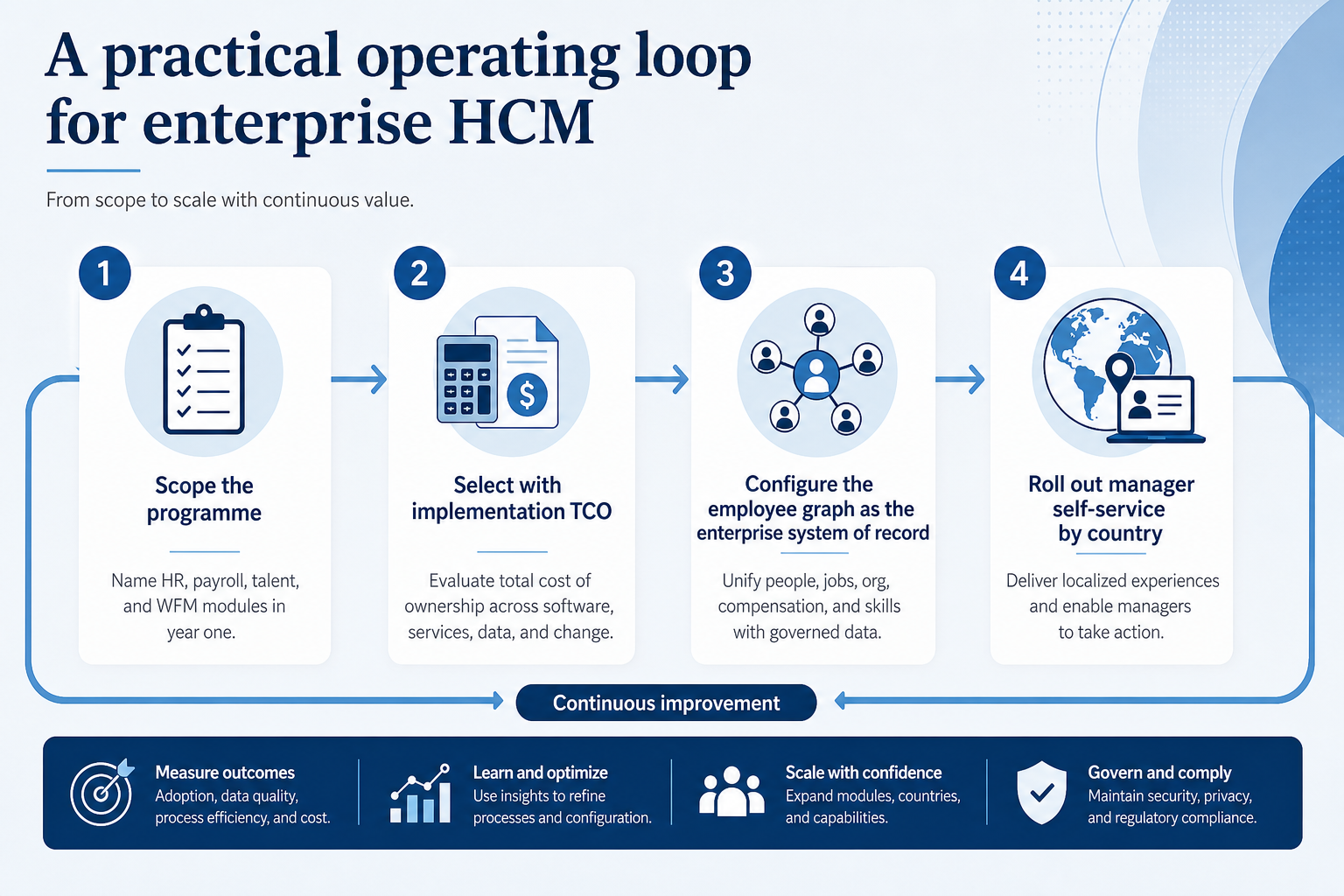
Learn more →Understand what needs to happen before comparing how products implement each step. Support overlays use structured research — never video inference.
Support labels come from structured feature research — not from videos.
Objective
No surprise module stack.
Next step
Next step
Next step
Compare two products against the same workflow using researched assessments. Official demos help you see the workflow — they do not change support status.
HubSpot
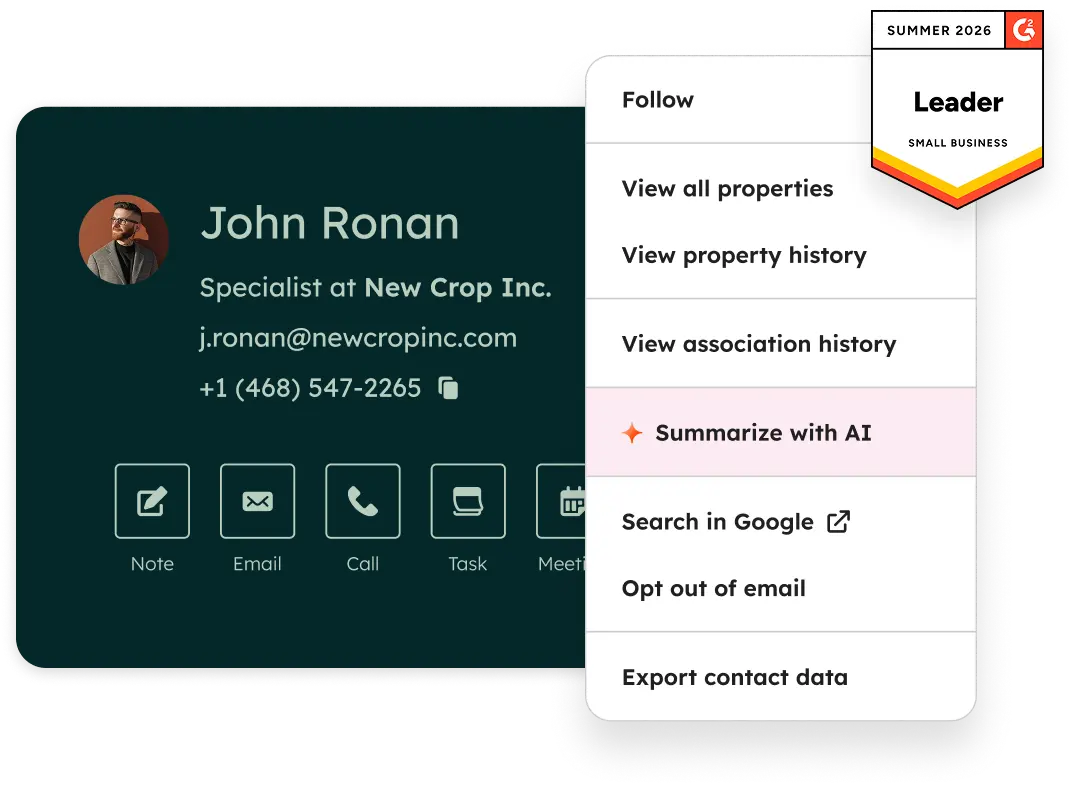
Official Free CRM hero product visualization.
What to notice
Not shown in this demo

Pipedrive
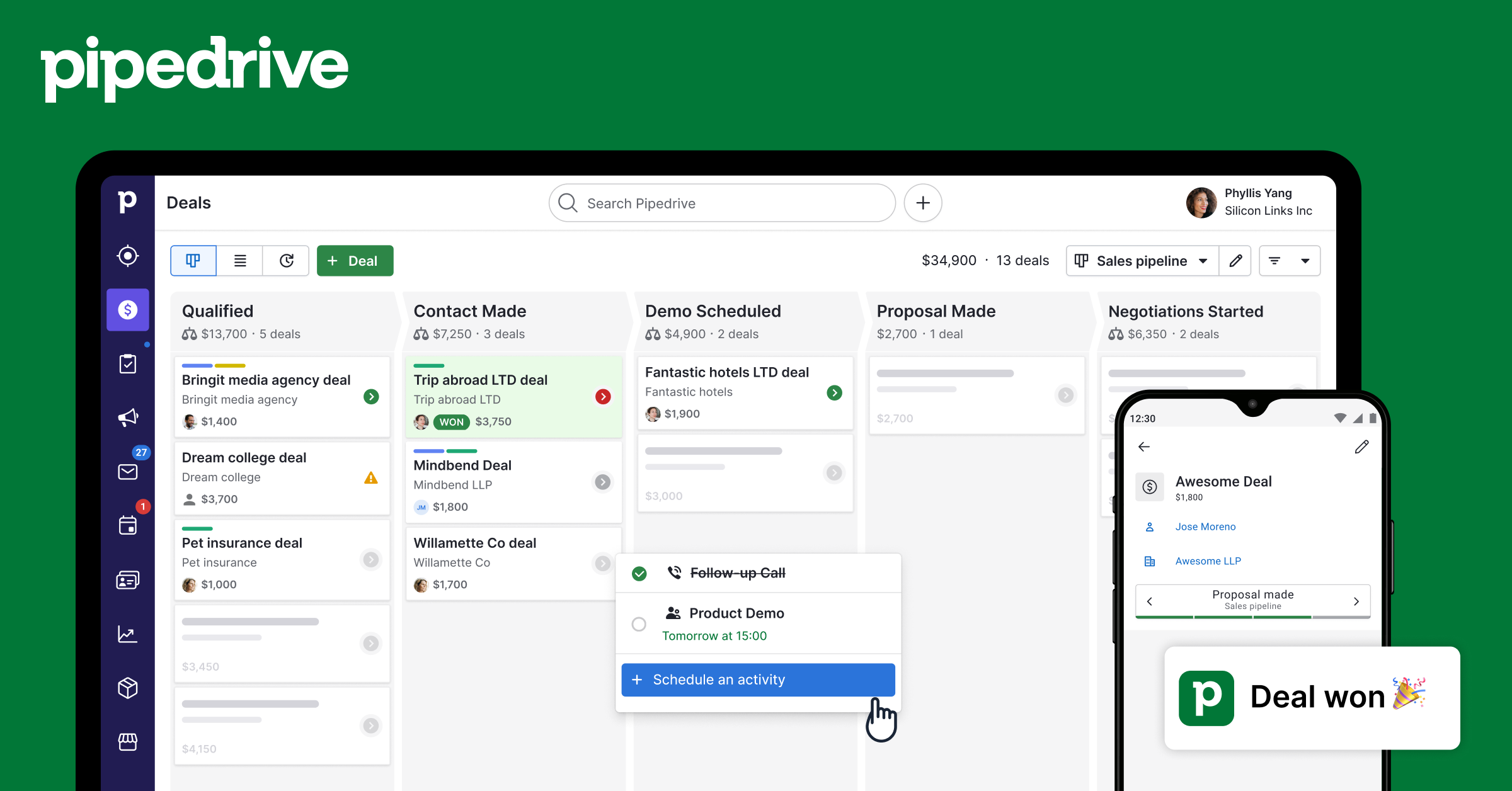
Pipedrive’s sales CRM product view as shown on the official site.
What to notice
Not shown in this demo
Canonical feature assessments for this workflow — not inferred from demos.
| Step | HubSpot | Pipedrive |
|---|---|---|
| Scope the programme | Unknown | Unknown |
| Quote TCO | Unknown | Unknown |
| Pilot a country or BU | Unknown | Unknown |
| Operate | Unknown | Unknown |
Based on the enterprise hcm workflow, buyers commonly evaluate the checklist below. Nothing is written to your decision profile until you confirm in the tool.
Context: useCase=enterprise-hcm — tools apply this only after your confirmation.
Best when
This use case is the blocking weekly ritual.
Best when
Another HR cluster is primary — keep this tool on a separate shortlist.
Catalogue products that list enterprise hcm as a supported use case. Inclusion here is not a ranking. Official demo counts never change ranking.
Hr
Enterprise HCM default — custom PEPM quote (no published seat $); implementation-led. Landscape only vs SMB HRIS/payroll.
Oracle Fusion Cloud HCM — modular enterprise suite (Global HR, payroll, talent, WFM); custom quote, no published PEPM.
Hr
Enterprise HCM + WFM (Kronos heritage) — custom quote; Bryte AI. Distinct from UKG Ready (mid-market bundles).

Hr
AI-powered HCM (HR, pay, time, talent) with continuous payroll calculation — custom quote; formerly Ceridian.
In the current HR catalogue wave, explore: workday, oracle-hcm, ukg-pro, dayforce. Related products appear when those soft entries are seeded and tagged.
No. Fit depends on job cluster, headcount, and plan gates. Use the Best HR software page for methodology-based editor’s picks inside clusters — not one undifferentiated ranking.
Keep employee records, org charts, PTO, and onboarding as the people system of record.
Run payroll, tax filings, and benefits administration for employees.
Unify HR, payroll, and IT/spend workflows on one employee system of record.
Plan shifts, open shifts, and schedule publishing for frontline and deskless teams.
Use Finder for a fit-based shortlist, compare products, or build a requirements checklist before demos.
How we review
Evaluation, verification, and refresh — no fake testing claims.
Editorial methodology
Category criteria and scores grounded in evidence.
Editorial policy
Authorship, evidence levels, scoring, and disclosures.
Corrections
Spot something outdated? Tell us.
Want clearer software shortlists? Get buying guides and comparisons by email.
Newsletter coming soon.